Does stirring cool down liquid?
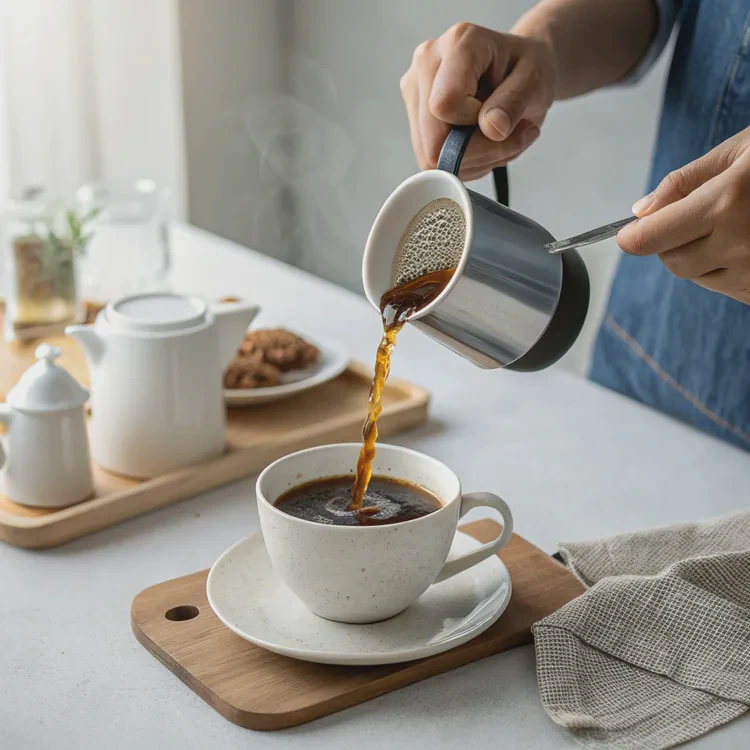
One afternoon, I stirred a cup of hot coffee, expecting it to cool faster — and it did. But the reason wasn’t as simple as I thought. Stirring doesn’t magically make heat disappear; it helps heat move. The secret lies in how fluids transfer energy.
Stirring helps a liquid cool down faster by improving heat transfer through convection, which evenly distributes temperature and increases contact with cooler surroundings.
This principle is at the core of all liquid cooling systems, from your morning coffee to industrial heat exchangers and CPU coolers. Let’s explore how it works, why motion affects temperature, and what new discoveries are changing the way we understand cooling science.
What is the principle of liquid heat transfer?
Every liquid has one job when it comes to heat — to move it. Whether we are cooling a CPU or chilling a drink, the same fundamental laws of physics apply.
The principle of liquid heat transfer is based on conduction, convection, and radiation — with convection playing the main role in how heat moves within a fluid.
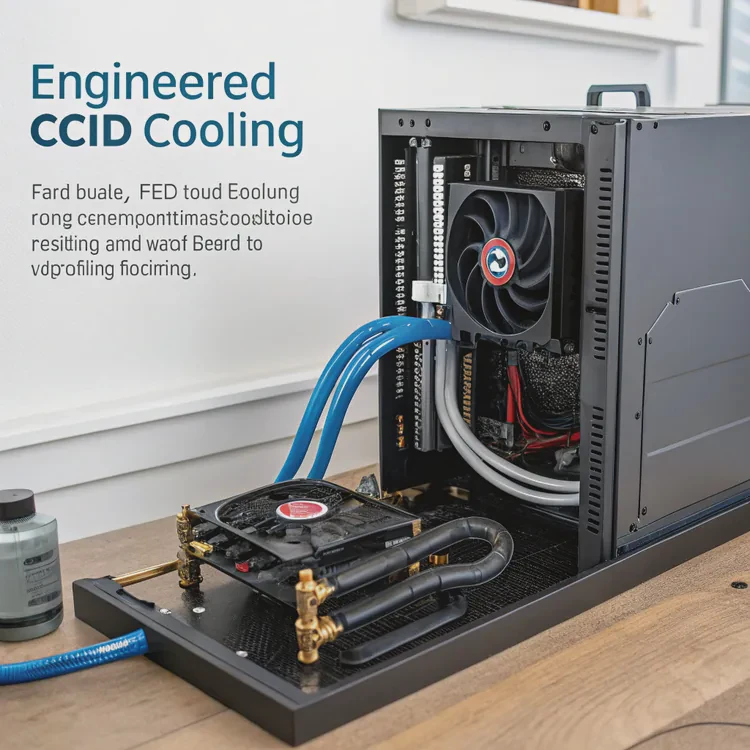
The three heat transfer methods
| Type | Description | Role in Liquids |
|---|---|---|
| Conduction | Heat moves through direct molecular contact. | Occurs between adjacent fluid layers. |
| Convection | Heat transfers through the motion of the liquid itself. | Dominant in liquid cooling systems. |
| Radiation | Heat travels as electromagnetic waves. | Minimal in most liquids. |
How heat moves in liquids
When a part of the liquid becomes warmer, its molecules move faster and spread apart. This causes the warmer fluid to rise while cooler, denser liquid moves down — forming a natural circulation loop known as convection current.
This process continues until the liquid’s temperature equalizes or until external cooling removes heat. That’s why a pot of boiling water circulates naturally, even without stirring.
Role in cooling systems
In engineered systems like liquid CPU coolers, convection is the dominant cooling mechanism. Pumps push coolant through a loop, continuously transferring heat from the processor to the radiator, where it’s released into the air.
By controlling fluid flow, designers can optimize how efficiently heat leaves the system.
Why does stirring affect temperature?
When I stir my coffee or a pot of soup, the liquid cools faster. The stirring itself doesn’t remove heat; it helps spread it out so the surface can release it more effectively.
Stirring affects temperature by breaking thermal layers and enhancing convection, allowing faster heat exchange between the liquid and its environment.
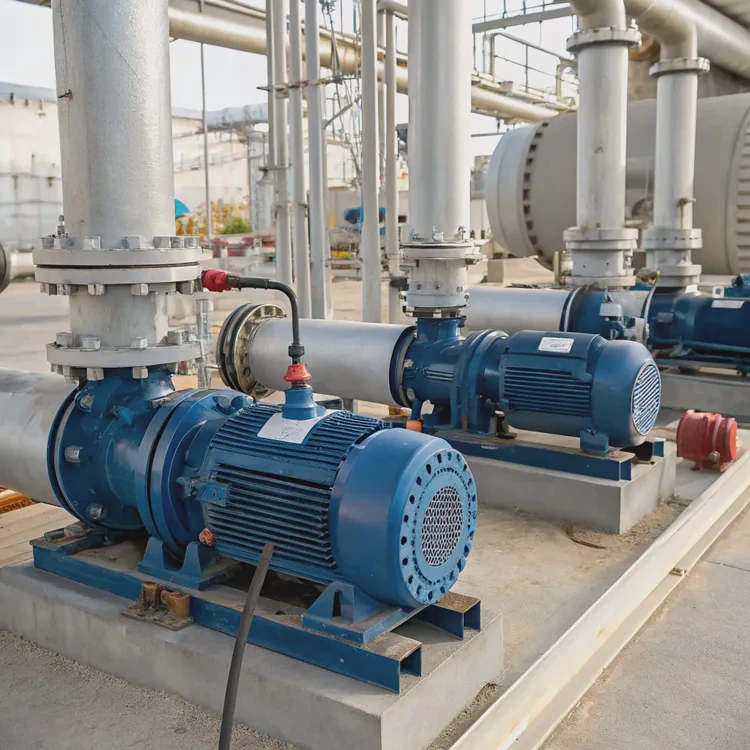
The science behind stirring and cooling
In a still liquid, heat moves slowly from the hot core to the surface by conduction. The outer layer cools down faster because it’s exposed to air, but the inner part stays hot longer.
When you stir, you mix the liquid — bringing hot molecules to the surface and cool ones inward. This increases temperature uniformity and helps the liquid release heat faster to the surrounding air or container.
Effects of stirring on cooling rate
| Condition | Cooling Efficiency | Explanation |
|---|---|---|
| No stirring | Low | Heat moves mainly by conduction; surface cools slowly. |
| Gentle stirring | Moderate | Promotes convection, improving heat balance. |
| Strong stirring | High | Maximizes surface contact and accelerates heat loss. |
Why stirring seems to “cool” a liquid
The sensation that stirring cools a liquid isn’t because energy disappears, but because:
- Temperature equalizes throughout the liquid faster.
- The surface area exposed to cooler air increases temporarily.
- Evaporation may rise due to movement, removing heat as molecules escape.
So, stirring doesn’t “create” cooling — it enables it by enhancing the physical processes already at work.
A real-world example
In computer liquid cooling, pumps perform the same role as stirring. They keep the coolant moving, ensuring even temperature distribution and consistent contact with heat exchangers. Without motion, the liquid near the CPU block would heat up quickly and lose efficiency.
How to enhance liquid cooling through motion?
Motion is one of the most powerful tools in thermal management. Whether you’re designing a cooler or stirring a pot, increasing fluid motion always boosts heat transfer.
To enhance liquid cooling through motion, increase turbulence, optimize flow rate, and maximize surface contact between the liquid and heat source.
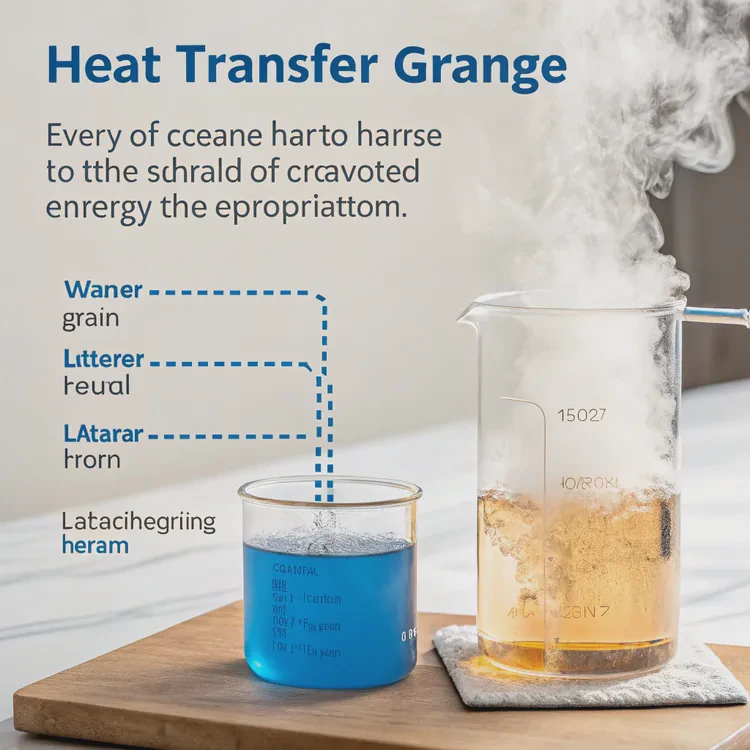
1. Increase turbulence
Turbulence mixes hot and cold regions of the liquid, breaking up stagnant layers that resist heat flow. While laminar (smooth) flow is quiet and stable, turbulent flow transfers heat much faster.
| Flow Type | Description | Heat Transfer Efficiency |
|---|---|---|
| Laminar Flow | Smooth, layered motion | Low |
| Turbulent Flow | Chaotic, mixed motion | High |
In engineering, creating controlled turbulence inside heat exchangers or CPU blocks increases cooling efficiency dramatically.
2. Optimize flow rate
Faster flow means more frequent heat exchange, but there’s a balance. Too slow, and the liquid overheats; too fast, and the pump wastes energy or creates noise.
Ideal flow rate depends on system design. For example:
- CPU cooling loops perform best between 0.8–1.5 liters per minute (LPM).
- Industrial systems adjust flow based on temperature difference and surface area.
3. Improve contact surface
Heat only transfers where the liquid touches the surface. Increasing contact area improves performance:
- Use microchannel structures inside cooling blocks.
- Employ finned radiators to expand surface exposure.
- Design smoother internal flow paths to avoid dead zones.
4. Promote evaporation when possible
In open systems (like beverages or lab setups), stirring can increase evaporation, carrying away heat through the phase change process. Every gram of liquid that evaporates removes energy — known as latent heat of vaporization.
5. Maintain consistent motion
Constant, steady movement maintains uniform temperature and prevents hotspots. Pumps, impellers, or natural convection loops can provide this motion continuously.
My observation
When testing a small water tank for cooling prototypes, I noticed a simple change — adding a small impeller to circulate water — reduced average temperature by nearly 15%. It didn’t make the water colder by itself; it helped the heat escape more efficiently.
What are the physical trends in cooling science?
Modern cooling science is rapidly evolving. As devices get smaller and more powerful, researchers are exploring new ways to control heat using motion, materials, and even quantum effects.
Recent trends in cooling science include advanced fluid dynamics, nanofluid technology, active flow control, and biomimetic designs inspired by nature.
1. Nanofluids
Nanofluids are traditional liquids (like water or oil) mixed with nanoparticles — often metals or ceramics. These tiny particles dramatically improve thermal conductivity, enhancing how efficiently the fluid transfers heat.
Benefits include:
- Faster heat transfer
- Improved stability under high loads
- Lower temperature gradients
Common nanoparticles used: aluminum oxide, copper oxide, silver, and graphene.
2. Active flow control
Next-generation systems use smart pumps and sensors to adjust flow rate dynamically. AI-based algorithms monitor temperature in real time and regulate liquid motion to maximize efficiency while minimizing energy use.
This technology is already appearing in high-end CPU coolers and industrial chillers.
3. Microchannel and capillary cooling
Researchers are shrinking cooling structures to the microscale, where heat exchange happens in ultra-thin liquid films or capillary channels. These designs use less fluid but remove more heat per unit area, making them perfect for compact electronics.
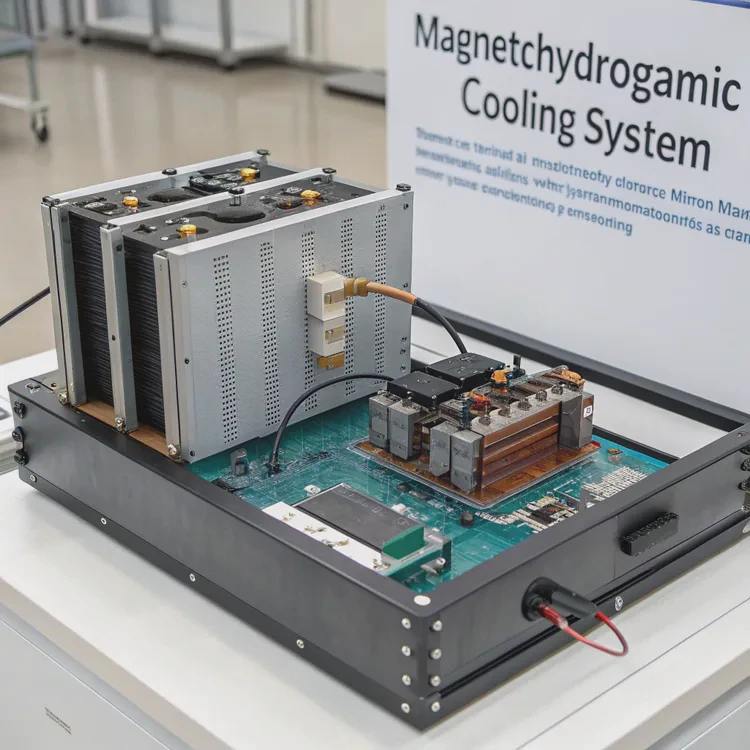
4. Magnetohydrodynamic (MHD) cooling
MHD cooling uses magnetic fields to control electrically conductive fluids, like liquid metals. It eliminates mechanical pumps altogether, creating silent, wear-free cooling with precise control over flow direction.
5. Biomimetic designs
Nature has already solved many cooling challenges. Engineers now design fluid systems inspired by blood circulation, leaf veins, and fish gills, mimicking how living organisms regulate temperature efficiently with minimal energy.
6. Quantum and phase-change cooling
At the frontier of cooling research, quantum materials and phase-change fluids are being explored for ultra-fast heat dissipation. These materials change state (from liquid to gas or solid to liquid) to absorb massive amounts of heat without raising temperature quickly.
Trends summary
| Trend | Description |
|---|---|
| Nanofluid Cooling | Enhances heat transfer with nanoparticles. |
| Active Flow Control | Adjusts motion dynamically for best efficiency. |
| Microchannel Designs | Improves heat removal in small devices. |
| MHD Systems | Uses magnetic fields to move conductive fluids. |
| Biomimetic Systems | Mimics nature’s thermal management methods. |
Looking ahead
The future of cooling lies in combining fluid motion, material science, and smart control. Systems may soon be able to self-regulate temperature, predict heat loads, and adapt automatically — turning cooling from a passive process into an intelligent, active function.
Conclusion
Stirring doesn’t “create” cooling; it enhances heat transfer by improving convection and increasing interaction with the surroundings. Whether it’s your coffee, a car radiator, or a liquid CPU cooler, motion always helps heat move faster.
With breakthroughs like nanofluids, biomimetic flow paths, and AI-controlled pumps, the science of cooling is entering a new era — one where movement, materials, and intelligence work together to keep everything cooler, quieter, and more efficient than ever before.
TAGS
Latest Articles

Volume discount levels for heat sink orders?
Buyers often ask when heat sink prices start to drop with volume. Many worry they’re overpaying for small orders. This guide explains how B2B volume pricing works for thermal components. Heat sink
21 Dec,2025
Heat sink long-term supply contract options?
Many buyers want stable pricing and reliable delivery for heat sinks. But without a clear contract, risks grow over time. This article explores how to secure better long-term supply deals. Long-term
21 Dec,2025
Tooling cost for new heat sink profiles?
Many engineers struggle to understand why tooling for custom heat sinks costs so much. They worry about budgeting and production timelines. This article breaks down the cost drivers behind tooling.
21 Dec,2025
Heat sink custom sample process steps?
Sometimes, starting a custom heat sink project feels overwhelming—too many steps, too many unknowns, and too many risks. You want a sample, but not endless delays. The process for requesting and
20 Dec,2025
Standard B2B terms for heat sink payments?
When buyers and sellers in B2B heat sink markets talk about payment, many don’t fully understand what’s standard. This can lead to delayed orders, miscommunication, and even lost business
20 Dec,2025
Heat sink pricing factors for large orders?
Heat sinks are vital for many systems. When prices rise, projects stall and budgets break. This problem can hit teams hard without warning. Large order heat sink pricing depends on many factors. You
20 Dec,2025Related Articles
- Is liquid cooler better than air cooler?
- Does liquid cooler need thermal paste?
- Is liquid cooling better than air?
- How does liquid CPU cooler work?
- How to liquid cool a GPU?
- How to install a liquid CPU cooler?
- Does liquid cooling need thermal paste?
- Is liquid cooling more expensive?
- How to change water cooling liquid?
- Where to put liquid cooling radiator?
- Which EVs have liquid cooled batteries?
- Does the Ryzen 7 7800X3D need liquid cooling?
Author
Dr. Emily Chen
Chief AI Researcher
Leading expert in thermal dynamics and AI optimization with over 15 years of experience in data center efficiency research.
Categories
Latest Products






Recommend Categories
- Liquid cooling plate Manufacturer
- Industrial Heat Sink Manufacturer
- Standard Heat Sink Manufacturer
- Aluminum Heat Sink Manufacturer
- Copper Heat Sink Manufacturer
- Anodized Heatsink Manufacturer
- Stamping heat sink Manufacturer
- Die Casting Heatsink Manufacturer
- Soldering heat sink Manufacturer
- CNC Parts Manufacturer
Latest Products
- Wholesale Aluminum Radiator
- Water Cooling Plate Kit
- Water Cooling Heat Sink
- Water Cooling Heat Sink Kit
- Stainless Steel Water Distributor
- Server Water Cooling Plate Kit
- Server Liquid Cooling System
- Server Aluminum Cooling Kit
- S19 Full Cover Cooling Plate
- S19 Cooling Plate Kit
- S19 Aluminum Cooling Plate
Contact Expert
Have questions about this article? Reach out to our experts directly.