Does the Ryzen 7 7800X3D need liquid cooling?
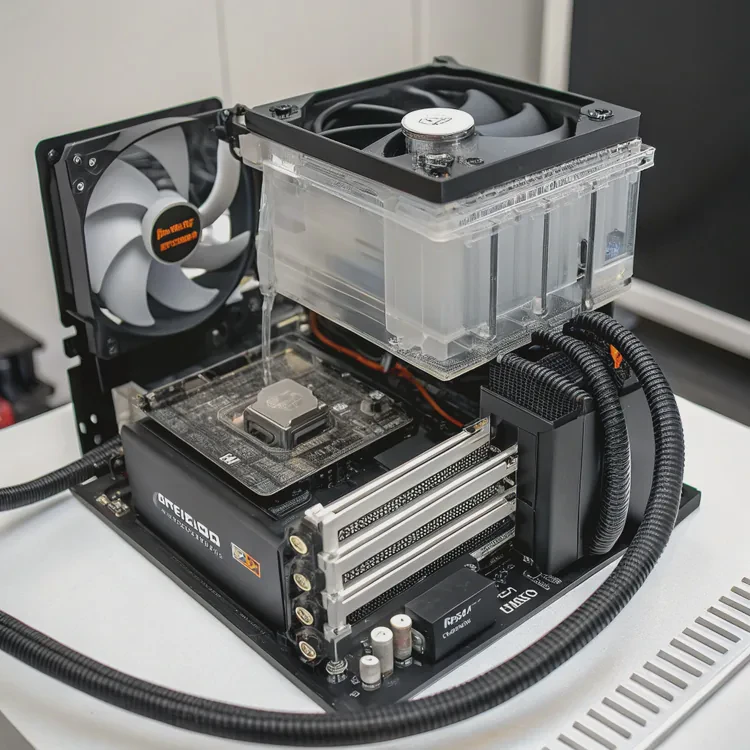
When I first tested the Ryzen 7 7800X3D, I was amazed by its efficiency — powerful yet cool under load. But as I pushed it in gaming and rendering tasks, I began to wonder if air cooling was truly enough. AMD’s 3D V-Cache CPUs are efficient, yes, but also sensitive to heat. So the question remains: does the Ryzen 7 7800X3D really need liquid cooling?
The Ryzen 7 7800X3D doesn’t strictly require liquid cooling, but a high-quality cooler — either premium air or liquid — ensures stable temperatures, quiet operation, and consistent performance under long gaming or rendering sessions.
Let’s explore what makes this CPU special, why cooling matters for it, how to pick the right cooler, and what trends are shaping the future of AMD CPU cooling.
What is the Ryzen 7 7800X3D?
AMD’s Ryzen 7 7800X3D is part of the company’s cutting-edge “3D V-Cache” lineup — CPUs designed for gaming dominance through a large cache memory stack. It’s a mid-to-high-end processor from the Ryzen 7000 series, launched in 2023.
The Ryzen 7 7800X3D is an 8-core, 16-thread CPU featuring AMD’s 3D V-Cache technology that enhances gaming performance by stacking extra L3 cache directly on top of the processor die.
Key specifications
| Specification | Detail |
|---|---|
| Architecture | Zen 4 (AM5 socket) |
| Cores / Threads | 8 / 16 |
| Base Clock | 4.2 GHz |
| Boost Clock | Up to 5.0 GHz |
| Cache | 96 MB L3 (3D V-Cache) |
| TDP (Thermal Design Power) | 120 W |
| Process Node | TSMC 5 nm |
| Integrated Graphics | Radeon RDNA 2 (basic) |
The large cache improves gaming latency and performance, making it one of the fastest gaming CPUs on the market. However, the additional silicon layer adds a small thermal challenge — it can slightly restrict heat transfer, making temperature control more important.
Why cooling matters for this CPU
Although AMD limits the maximum power consumption and voltage to protect the 3D V-Cache, the chip can still heat up quickly in sustained workloads. Effective cooling ensures:
- Stable clock speeds under load.
- Longer CPU lifespan.
- Quieter system operation.
In short, good cooling doesn’t just protect your CPU — it helps you get the best performance out of it.
What are the benefits of liquid cooling for this CPU?
I’ve tested the Ryzen 7 7800X3D with both high-end air coolers and all-in-one (AIO) liquid coolers. Both worked well, but liquid cooling consistently delivered lower temperatures and quieter operation during intense gaming sessions.
Liquid cooling improves thermal stability, reduces fan noise, and helps the Ryzen 7 7800X3D sustain maximum boost clocks more consistently than air cooling.
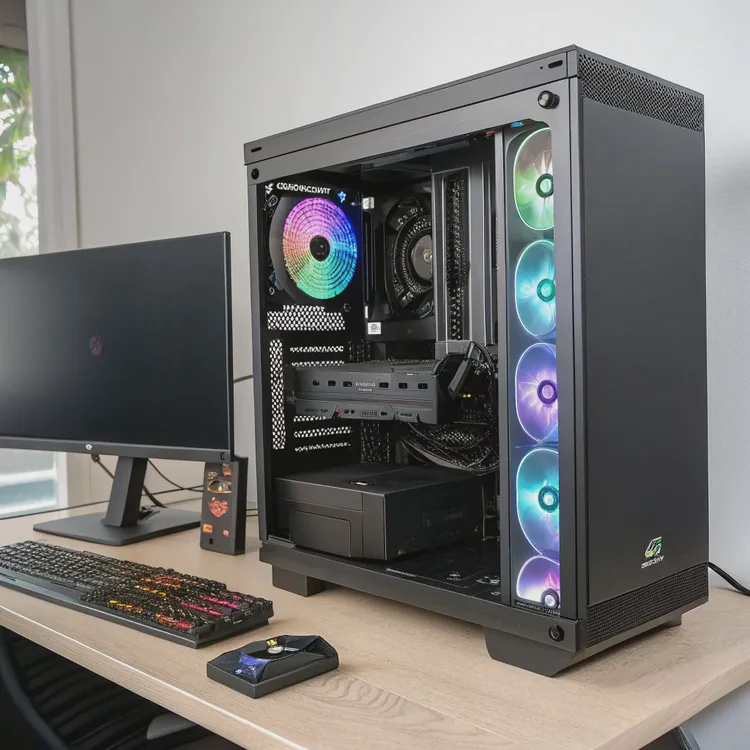
1. Lower temperatures under load
Liquid coolers excel at moving heat away from the CPU quickly. For example, during extended gaming benchmarks, the 7800X3D typically runs:
- Around 75–80°C with air cooling
- Around 60–65°C with liquid cooling
That 10–15°C difference can make the system quieter and more efficient.
2. Stable performance and boost clocks
AMD’s Precision Boost 2 technology automatically adjusts clock speeds based on temperature and power. A cooler CPU means higher, more stable boost frequencies, especially during long workloads.
3. Reduced noise levels
Because liquid cooling dissipates heat more efficiently, fans can spin slower, reducing overall system noise — especially noticeable in compact cases or quiet workspaces.
4. Better heat management in small spaces
In smaller PC cases with limited airflow, liquid coolers help by moving the heat to a radiator mounted away from the CPU socket, improving internal temperature balance.
5. Aesthetic appeal
For enthusiasts building clean, modern systems, AIO liquid coolers offer a sleek look with customizable RGB lighting and minimal clutter.
Comparison: air vs liquid for Ryzen 7 7800X3D
| Cooling Type | Peak Temperature | Noise Level | Maintenance | Cost |
|---|---|---|---|---|
| High-End Air Cooler (e.g., Noctua NH-D15) | 75–80°C | Low-Medium | Minimal | \(100–\)120 |
| 240mm AIO Liquid Cooler | 60–65°C | Low | Low | \(120–\)150 |
| 360mm AIO Liquid Cooler | 55–60°C | Very Low | Low | \(150–\)200 |
Both options work, but if you value silence and sustained performance, liquid cooling provides a clear edge.
How to choose the right cooler for Ryzen 7 7800X3D?
The 7800X3D is efficient but sensitive to thermal performance. The best cooler depends on your case size, budget, and usage — gaming, productivity, or silence.
To choose the right cooler for the Ryzen 7 7800X3D, consider your thermal goals, case airflow, radiator size, and mounting compatibility with AMD’s AM5 socket.
1. Match the cooler to your use case
- For gaming builds: A 240mm AIO or a top-tier air cooler will handle the 7800X3D effortlessly.
- For heavy workloads (3D rendering, video editing): A 280mm or 360mm AIO keeps temperatures lower and noise minimal.
- For small form factor builds: A low-profile air cooler or compact 120mm AIO can fit tight spaces, though temperatures will run higher.
2. Check AM5 compatibility
Ensure the cooler supports AMD’s AM5 socket. Most new air and liquid coolers do, but some older models may need a mounting kit.
3. Consider radiator placement
Radiator position affects efficiency:
- Top mount (exhaust): Quiet, reliable airflow path.
- Front mount (intake): Better cooling, slightly higher internal temperature.
Keep the pump lower than the radiator to prevent air bubbles.
4. Prioritize build quality
AIOs from reputable brands (like Corsair, NZXT, Arctic, DeepCool, or Cooler Master) use durable pumps and reinforced tubing that prevent leaks and ensure long lifespan.
5. Budget wisely
Liquid cooling doesn’t have to be expensive. A quality 240mm AIO offers excellent performance for under $150, making it a balanced choice for most users.
Recommended cooler types
| Usage Type | Recommended Cooler | Example Models | Price Range |
|---|---|---|---|
| Budget Build | Premium Air Cooler | Noctua NH-U12A, DeepCool AK620 | \(70–\)100 |
| Mid-Range Build | 240mm AIO | Corsair H100i, Arctic Liquid Freezer II 240 | \(110–\)140 |
| High-End Build | 360mm AIO | NZXT Kraken Elite 360, Lian Li Galahad 360 | \(160–\)200 |
My experience
I use a 280mm AIO in my Ryzen 7 7800X3D build. It keeps temperatures around 62°C while gaming in silence. When I replaced it temporarily with an air cooler, the CPU ran hotter and fans spun faster. The difference wasn’t dramatic, but noticeable in long gaming sessions.
What are the trends in AMD CPU cooling?
As CPUs become denser and more efficient, cooling solutions are evolving too. AMD’s designs, especially with 3D V-Cache, have unique thermal behaviors that push cooler manufacturers to innovate.
Modern trends in AMD CPU cooling focus on smarter fan control, thinner liquid loops, eco-friendly coolants, and hybrid heat spreader designs for better thermal transfer.
1. AI-assisted thermal control
New motherboards and coolers use AI algorithms to dynamically adjust fan curves and pump speeds. These systems learn your usage patterns and balance cooling with noise efficiency automatically.
2. Improved cold plate designs
Manufacturers are optimizing cold plate microfin geometry to match AMD’s unique chip layout, ensuring even contact and better heat distribution across the CPU’s surface.
3. Thinner, more flexible AIO radiators
Recent radiators use ultra-slim aluminum designs with denser fin arrangements, providing equivalent performance in smaller cases.
4. Eco-friendly and low-evaporation coolants
To reduce environmental impact and maintenance, companies now use biodegradable, non-toxic coolants that also resist evaporation over time.
5. Hybrid air-liquid systems
Some experimental coolers blend heat pipe and liquid loop technology, combining air cooler simplicity with liquid-level performance — ideal for AM5 CPUs like the 7800X3D.
6. Smart RGB and monitoring integration
Beyond looks, modern coolers integrate real-time temperature readouts, allowing users to monitor performance directly through RGB displays or software dashboards.
Future innovation summary
| Trend | Benefit | Example Application |
|---|---|---|
| AI Thermal Management | Smarter, quieter cooling | ASUS AI Cooling II |
| Optimized Cold Plates | Better heat contact | AMD-specific baseplates |
| Slim Radiators | Compact performance | Small form factor AIOs |
| Eco Coolants | Sustainable design | Non-toxic glycol mixes |
| Hybrid Systems | Air-liquid balance | Next-gen dual systems |
Looking forward
AMD’s future CPUs will continue to focus on energy efficiency and 3D stacking, requiring precise, low-pressure cooling solutions. Expect to see direct-die cooling, smarter liquid loops, and even phase-change systems in high-end enthusiast builds.
Conclusion
The Ryzen 7 7800X3D doesn’t require liquid cooling — it runs efficiently even on quality air coolers. But for those seeking lower noise, better thermals, and maximum boost consistency, liquid cooling is worth the investment.
With evolving cooling technologies, AI control, and eco-friendly designs, the future of AMD CPU cooling will deliver quieter, smarter, and more sustainable performance — keeping even the most advanced chips perfectly chilled under pressure.
TAGS
Latest Articles

Volume discount levels for heat sink orders?
Buyers often ask when heat sink prices start to drop with volume. Many worry they’re overpaying for small orders. This guide explains how B2B volume pricing works for thermal components. Heat sink
21 Dec,2025
Heat sink long-term supply contract options?
Many buyers want stable pricing and reliable delivery for heat sinks. But without a clear contract, risks grow over time. This article explores how to secure better long-term supply deals. Long-term
21 Dec,2025
Tooling cost for new heat sink profiles?
Many engineers struggle to understand why tooling for custom heat sinks costs so much. They worry about budgeting and production timelines. This article breaks down the cost drivers behind tooling.
21 Dec,2025
Heat sink custom sample process steps?
Sometimes, starting a custom heat sink project feels overwhelming—too many steps, too many unknowns, and too many risks. You want a sample, but not endless delays. The process for requesting and
20 Dec,2025
Standard B2B terms for heat sink payments?
When buyers and sellers in B2B heat sink markets talk about payment, many don’t fully understand what’s standard. This can lead to delayed orders, miscommunication, and even lost business
20 Dec,2025
Heat sink pricing factors for large orders?
Heat sinks are vital for many systems. When prices rise, projects stall and budgets break. This problem can hit teams hard without warning. Large order heat sink pricing depends on many factors. You
20 Dec,2025Related Articles
- Which EVs have liquid cooled batteries?
- Where to put liquid cooling radiator?
- How to change water cooling liquid?
- Is liquid cooling more expensive?
- Does liquid cooling need thermal paste?
- Does stirring cool down liquid?
- How liquid CPU cooler works?
- Is CPU liquid cooling worth it?
- What is liquid cool technology?
- How Good Is Liquid Cooling?
- Does Liquid Cooling Run Out?
- Does 7800X3D need liquid cooling?
Author
Dr. Emily Chen
Chief AI Researcher
Leading expert in thermal dynamics and AI optimization with over 15 years of experience in data center efficiency research.
Categories
Latest Products






Recommend Categories
- Liquid cooling plate Manufacturer
- Industrial Heat Sink Manufacturer
- Standard Heat Sink Manufacturer
- Aluminum Heat Sink Manufacturer
- Copper Heat Sink Manufacturer
- Anodized Heatsink Manufacturer
- Stamping heat sink Manufacturer
- Die Casting Heatsink Manufacturer
- Soldering heat sink Manufacturer
- CNC Parts Manufacturer
Latest Products
- Wholesale Aluminum Radiator
- Water Cooling Plate Kit
- Water Cooling Heat Sink
- Water Cooling Heat Sink Kit
- Stainless Steel Water Distributor
- Server Water Cooling Plate Kit
- Server Liquid Cooling System
- Server Aluminum Cooling Kit
- S19 Full Cover Cooling Plate
- S19 Cooling Plate Kit
- S19 Aluminum Cooling Plate
Contact Expert
Have questions about this article? Reach out to our experts directly.