Is liquid cooler better than air cooler?
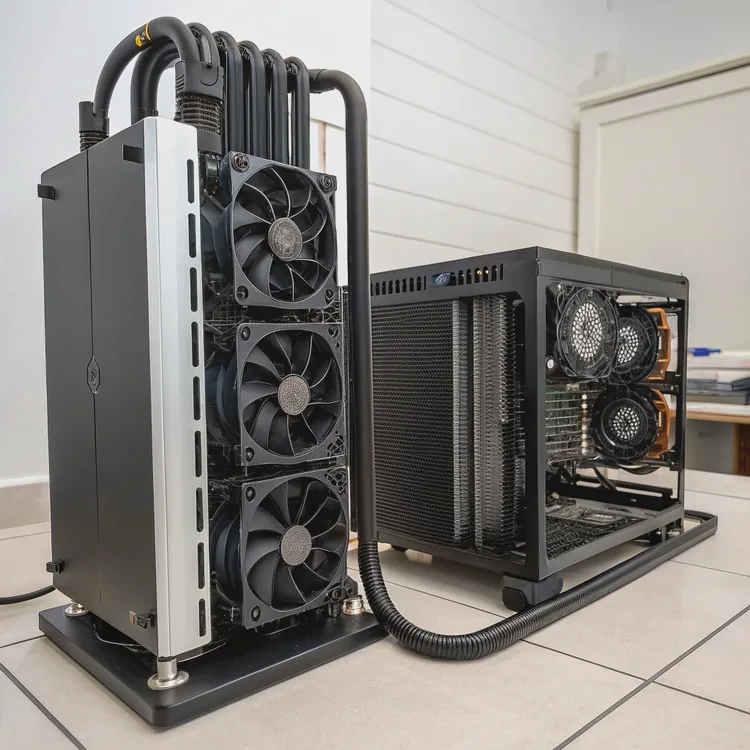
When I first started building high-performance PCs, one debate always came up — liquid cooler vs air cooler. Some people swore by the simplicity of air cooling, while others claimed liquid cooling was the ultimate solution. After testing both over the years, I learned one truth: neither is perfect, but each shines in specific situations.
A liquid cooler is generally better than an air cooler for high-performance systems due to its superior heat transfer, lower noise, and sleek design, while air coolers remain more affordable and reliable for everyday use.
Let’s explore what defines a liquid cooler, why it performs better in certain cases, how it compares to air cooling, and what exciting innovations are shaping the next generation of cooling technology.
What is a liquid cooler?
Every CPU and GPU generates heat when processing data. To keep performance stable, that heat must be transferred away quickly. Air coolers rely on fans and metal fins, while liquid coolers use coolant and radiators to move heat more efficiently.
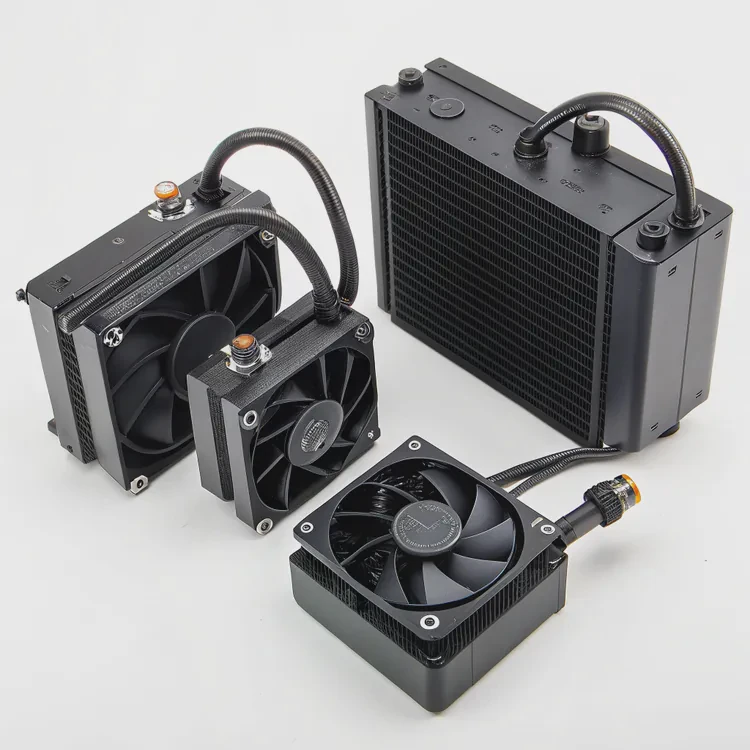
A liquid cooler is a closed-loop system that circulates coolant through a water block and radiator to remove heat from the CPU or GPU.
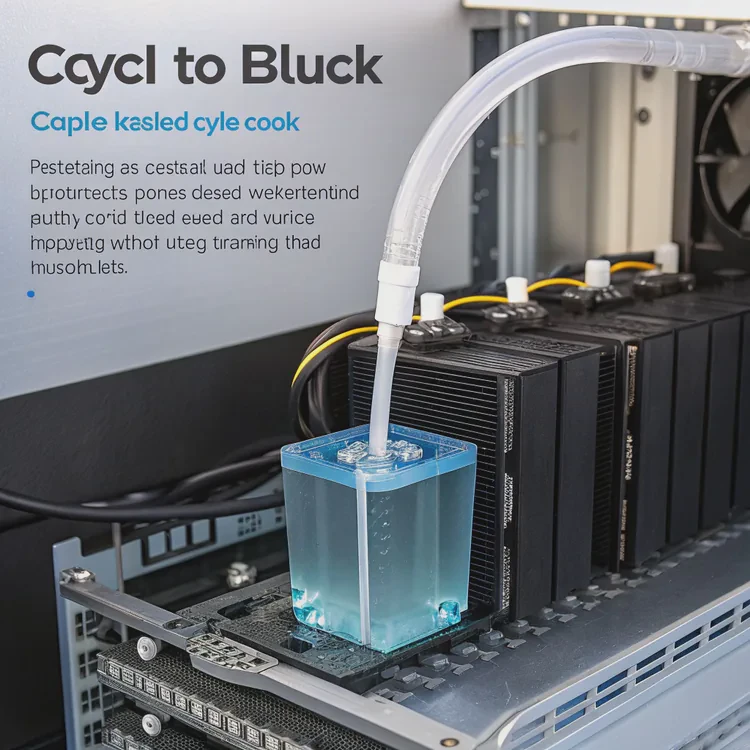
Main components of a liquid cooler
| Component | Description |
|---|---|
| Water Block | Attaches to the CPU or GPU surface to absorb heat. |
| Pump | Moves the coolant through the loop. |
| Radiator | Releases heat from the liquid into the air. |
| Fans | Blow air through the radiator to cool the liquid. |
| Tubes | Carry coolant between the block and radiator. |
How it works
- The water block absorbs heat from the CPU.
- The pump pushes heated liquid through tubes to the radiator.
- Fans blow air through the radiator fins, releasing heat into the environment.
- The cooled liquid flows back to the block to repeat the cycle.
This loop runs continuously, keeping your CPU temperature stable even under heavy loads like gaming, rendering, or simulations.
Types of liquid coolers
| Type | Description | Maintenance |
|---|---|---|
| AIO (All-in-One) | Pre-assembled and sealed unit. Easy to install. | Minimal |
| Custom Loop | Built manually with modular parts. High performance. | Requires maintenance |
AIO coolers are perfect for most users, combining simplicity with strong cooling power. Custom loops are for enthusiasts who want maximum performance and design flexibility.
What benefits does it have over air coolers?
When I switched my CPU from an air cooler to a 360mm liquid cooler, the difference was immediate. Temperatures dropped by 20°C, and fan noise became almost unnoticeable. Beyond just numbers, the system looked cleaner and ran smoother for long hours.
Liquid coolers outperform air coolers in cooling efficiency, noise control, and visual appeal, making them ideal for modern high-performance systems.
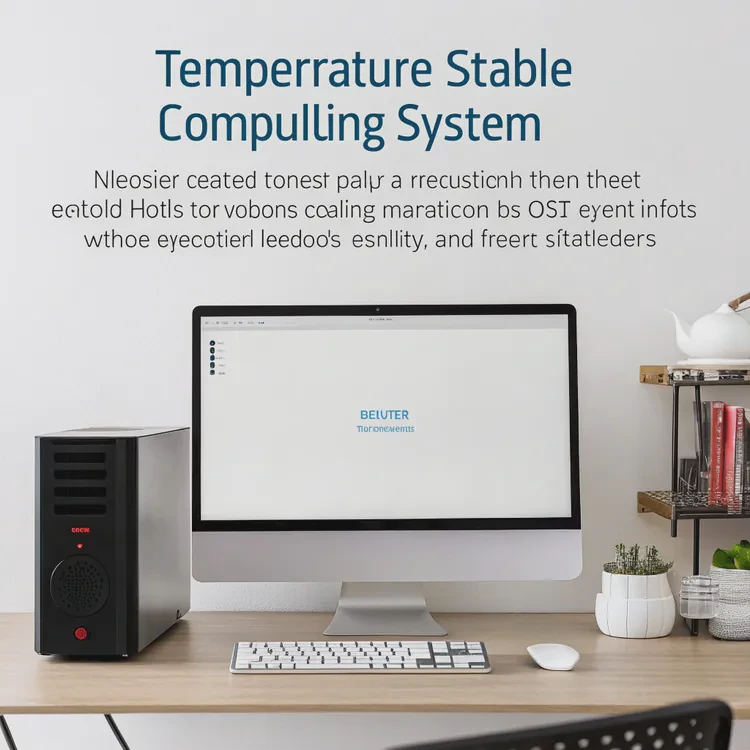
Key benefits of liquid coolers
| Benefit | Description |
|---|---|
| Superior Heat Dissipation | Liquid transfers heat faster than air, keeping CPU temperatures low. |
| Quiet Operation | Requires fewer fans running at lower speeds. |
| Stable Performance | Prevents thermal throttling under sustained workloads. |
| Better Overclocking Potential | Keeps CPUs cool when pushing higher voltages. |
| Aesthetic Design | Offers clean cable layout and customizable RGB lighting. |
Real-world results
A liquid cooler can reduce CPU temperatures by 20–30°C compared to air cooling during heavy use. For example, my Intel i9 processor reached 85°C with air cooling but stayed around 60°C after switching to liquid cooling. That temperature stability meant no throttling and consistently higher performance.
Noise reduction advantage
Because liquid systems move heat more efficiently, their fans don’t need to spin as fast. In quiet environments — like creative studios or offices — this makes a noticeable difference. The hum of multiple fans under air cooling disappears when replaced by a silent, steady pump.
Space and aesthetics
Large air coolers can block RAM slots and dominate the motherboard space. Liquid coolers free up that space, allowing neater cable management and improved airflow. The added visual element — sleek tubing, RGB lighting, and visible radiators — also enhances the look of a modern build.
How to compare liquid and air coolers?
Both liquid and air coolers have valid strengths. I often tell people: if you prioritize performance and silence, go liquid; if you value simplicity and reliability, go air.
Liquid coolers excel in thermal control and aesthetics, while air coolers are better for cost efficiency, maintenance, and durability.
Key comparison chart
| Feature | Air Cooler | Liquid Cooler |
|---|---|---|
| Cooling Performance | Moderate to good | Excellent |
| Noise Level | Higher (more fan RPM) | Lower (steady pump and fans) |
| Installation | Simple and quick | Requires careful setup |
| Maintenance | Almost none | Occasional checks needed |
| Durability | Very long lifespan | Pump lifespan limited (~5–7 years) |
| Aesthetic Appeal | Functional | Sleek, modern design |
| Cost Range | \(30–\)100 | \(100–\)300+ |
| Overclocking Support | Moderate | Excellent |
When air cooling is best
Air cooling is great for:
- Entry-level and mid-range systems
- Users who want plug-and-play reliability
- Compact cases without space for radiators
- Limited budgets
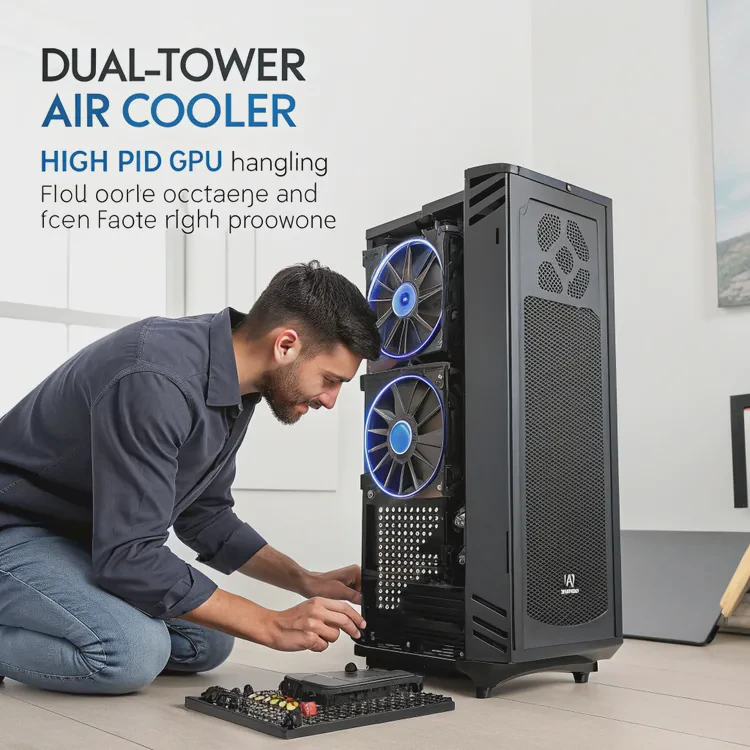
A well-made air cooler, like a dual-tower design, can handle even high-end CPUs effectively.
When liquid cooling is best
Liquid cooling fits:
- High-end gaming or workstation builds
- Overclockers or performance enthusiasts
- Users who want silent operation
- PC builders focused on design and aesthetics
For example, if your CPU runs at high wattage (over 125W TDP), liquid cooling helps maintain consistent performance under full load.
My practical advice
I usually recommend air cooling for systems that stay under moderate loads — like everyday work PCs. But if your setup handles tasks like 3D rendering or high-end gaming, the investment in a liquid cooler pays off with quieter and cooler performance.
What are the next-gen cooling innovations?
Cooling technology is evolving rapidly as processors and GPUs become more powerful. The next generation of coolers focuses on smarter control, new materials, and environmentally friendly designs.
Next-gen cooling innovations include AI control, hybrid liquid-air systems, advanced nanofluids, and sustainable eco-materials for high-efficiency cooling.
1. AI-based cooling control
Modern AIO coolers now feature smart controllers that automatically adjust pump and fan speeds based on real-time temperature data. AI algorithms predict heat spikes and respond instantly, optimizing cooling while saving power.
2. Hybrid cooling systems
Manufacturers are combining vapor chamber and liquid cooling technologies. Vapor chambers quickly spread heat from the CPU, while liquid loops remove it efficiently. This hybrid setup delivers excellent performance in both small and large systems.
3. Nanofluid coolants
New coolants infused with nanoparticles improve heat conductivity and resist corrosion. These nanofluids maintain performance longer, reduce oxidation, and improve coolant lifespan — ideal for long-term stability.
4. Compact, modular designs
Smaller, modular AIO coolers are gaining popularity for mini-ITX and small-form-factor builds. These designs fit into tight cases without losing performance and allow easier upgrades or repairs.
5. Eco-friendly cooling materials
Sustainability is shaping cooler design. Many companies are developing biodegradable coolants and recyclable radiators to reduce waste. Eco-friendly manufacturing also cuts carbon emissions while maintaining premium performance.
6. Liquid metal and graphene interfaces
Some new coolers are using liquid metal or graphene-based thermal materials instead of standard paste. These materials transfer heat far faster and can last for years without reapplication.
Cooling innovation summary
| Innovation | Description |
|---|---|
| AI Smart Control | Adjusts cooling in real time for optimal performance. |
| Hybrid Systems | Combine vapor chamber and liquid cooling. |
| Nanofluid Coolants | Enhance heat transfer and corrosion resistance. |
| Compact Modular Coolers | Designed for small cases with full performance. |
| Eco-Friendly Materials | Sustainable coolants and recyclable components. |
The future of cooling
Next-gen systems may even integrate phase-change cooling, similar to how refrigerators work. These designs can absorb and release heat by changing states between liquid and vapor, offering unmatched performance for next-level CPUs and GPUs.
Conclusion
Liquid coolers often outperform air coolers in temperature control, noise reduction, and design flexibility. Air coolers, however, remain unbeatable for their simplicity, cost, and reliability.
With new technologies like AI-based management, hybrid systems, and eco-friendly materials, cooling performance is entering a smarter and more sustainable era — making every system, from compact builds to supercomputers, cooler and quieter than ever before.
TAGS
Latest Articles

Volume discount levels for heat sink orders?
Buyers often ask when heat sink prices start to drop with volume. Many worry they’re overpaying for small orders. This guide explains how B2B volume pricing works for thermal components. Heat sink
21 Dec,2025
Heat sink long-term supply contract options?
Many buyers want stable pricing and reliable delivery for heat sinks. But without a clear contract, risks grow over time. This article explores how to secure better long-term supply deals. Long-term
21 Dec,2025
Tooling cost for new heat sink profiles?
Many engineers struggle to understand why tooling for custom heat sinks costs so much. They worry about budgeting and production timelines. This article breaks down the cost drivers behind tooling.
21 Dec,2025
Heat sink custom sample process steps?
Sometimes, starting a custom heat sink project feels overwhelming—too many steps, too many unknowns, and too many risks. You want a sample, but not endless delays. The process for requesting and
20 Dec,2025
Standard B2B terms for heat sink payments?
When buyers and sellers in B2B heat sink markets talk about payment, many don’t fully understand what’s standard. This can lead to delayed orders, miscommunication, and even lost business
20 Dec,2025
Heat sink pricing factors for large orders?
Heat sinks are vital for many systems. When prices rise, projects stall and budgets break. This problem can hit teams hard without warning. Large order heat sink pricing depends on many factors. You
20 Dec,2025Related Articles
- Does liquid cooler need thermal paste?
- Is liquid cooling better than air?
- How does liquid CPU cooler work?
- How to liquid cool a GPU?
- How to install a liquid CPU cooler?
- What is a liquid CPU cooler?
- Does stirring cool down liquid?
- Does liquid cooling need thermal paste?
- Is liquid cooling more expensive?
- How to change water cooling liquid?
- Where to put liquid cooling radiator?
- Which EVs have liquid cooled batteries?
Author
Dr. Emily Chen
Chief AI Researcher
Leading expert in thermal dynamics and AI optimization with over 15 years of experience in data center efficiency research.
Categories
Latest Products






Recommend Categories
- Liquid cooling plate Manufacturer
- Industrial Heat Sink Manufacturer
- Standard Heat Sink Manufacturer
- Aluminum Heat Sink Manufacturer
- Copper Heat Sink Manufacturer
- Anodized Heatsink Manufacturer
- Stamping heat sink Manufacturer
- Die Casting Heatsink Manufacturer
- Soldering heat sink Manufacturer
- CNC Parts Manufacturer
Latest Products
- Wholesale Aluminum Radiator
- Water Cooling Plate Kit
- Water Cooling Heat Sink
- Water Cooling Heat Sink Kit
- Stainless Steel Water Distributor
- Server Water Cooling Plate Kit
- Server Liquid Cooling System
- Server Aluminum Cooling Kit
- S19 Full Cover Cooling Plate
- S19 Cooling Plate Kit
- S19 Aluminum Cooling Plate
Contact Expert
Have questions about this article? Reach out to our experts directly.