Which EVs have liquid cooled batteries?
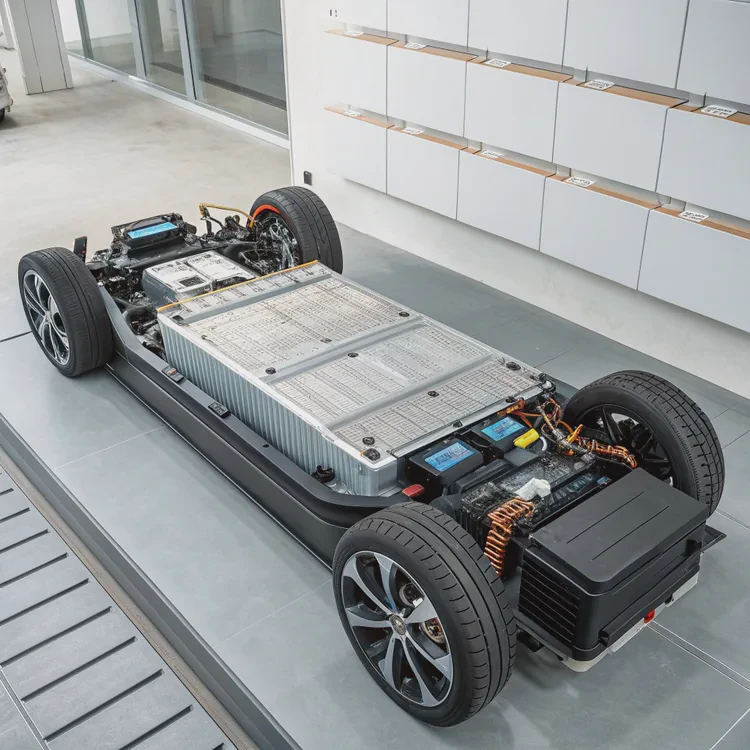
When I first learned about electric vehicles, I was surprised to discover that batteries could overheat even without an engine. It made me wonder: how do EVs handle that heat? The answer lies in liquid cooling, a system that has become standard in modern EVs for performance, safety, and durability.
Many electric vehicles today, such as Tesla, Porsche Taycan, and Nissan Ariya, use liquid-cooled battery packs to maintain optimal temperature, enable fast charging, and extend battery life.
In this article, I’ll explain what liquid battery cooling is, why it matters, how EV manufacturers implement it, and what new trends are shaping the next generation of electric vehicle thermal systems.
What is liquid battery cooling?
Every battery cell in an electric vehicle generates heat while charging or discharging. Without cooling, the temperature can rise too high, damaging cells or limiting performance. That’s where liquid cooling steps in.
Liquid battery cooling is a thermal management method that circulates coolant through channels or plates around battery cells to absorb heat and transfer it away efficiently.
How liquid cooling works
- Coolant circulation: A mixture of water and glycol (or similar fluid) flows through cooling plates or tubes inside the battery pack.
- Heat absorption: The coolant absorbs heat generated by the battery cells during operation or charging.
- Heat exchange: The heated liquid passes through a radiator or heat exchanger, releasing the heat into the air.
- Temperature regulation: Sensors and control systems adjust pump speeds and valve positions to maintain optimal battery temperature, usually between 20°C and 40°C.
Key components
- Cooling plates or channels — positioned under or between battery modules.
- Pump and coolant reservoir — circulate the liquid through the loop.
- Radiator or heat exchanger — releases heat to the outside environment.
- Sensors and controllers — monitor and adjust the system dynamically.
Types of battery cooling
| Cooling Type | Medium | Example Use | Characteristics |
|---|---|---|---|
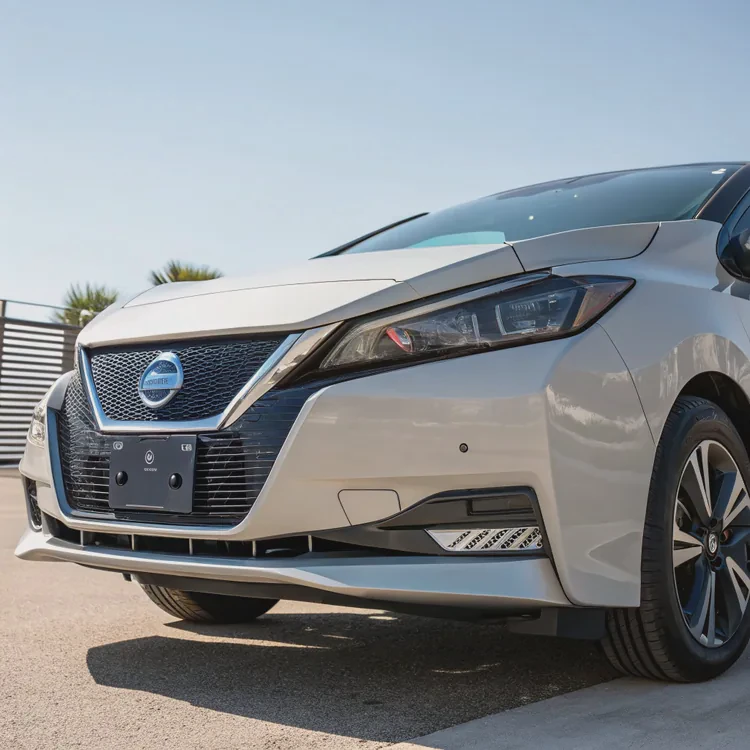
| Air Cooling | Air | Early EVs like Nissan Leaf (first generation) | Simple but less efficient |
| Liquid Cooling | Water/Glycol | Tesla Model S, Porsche Taycan | High efficiency, precise control |
| Refrigerant Cooling | Direct refrigerant contact | Hyundai Ioniq 5, BMW iX | Very fast response, complex system |
Liquid cooling has become the dominant method for EV batteries due to its balance of efficiency, cost, and design flexibility.
What benefits does it provide to EVs?
After driving both air-cooled and liquid-cooled EVs, I can confirm there’s a big difference — not just in performance, but also in how consistently the battery performs over time.
Liquid cooling improves EV performance by maintaining battery health, allowing faster charging, preventing overheating, and ensuring reliable operation in all weather conditions.
1. Stable battery temperature
EV batteries work best in a narrow temperature range. Liquid cooling keeps every cell within that range, even during long drives or rapid charging.
2. Faster charging speeds
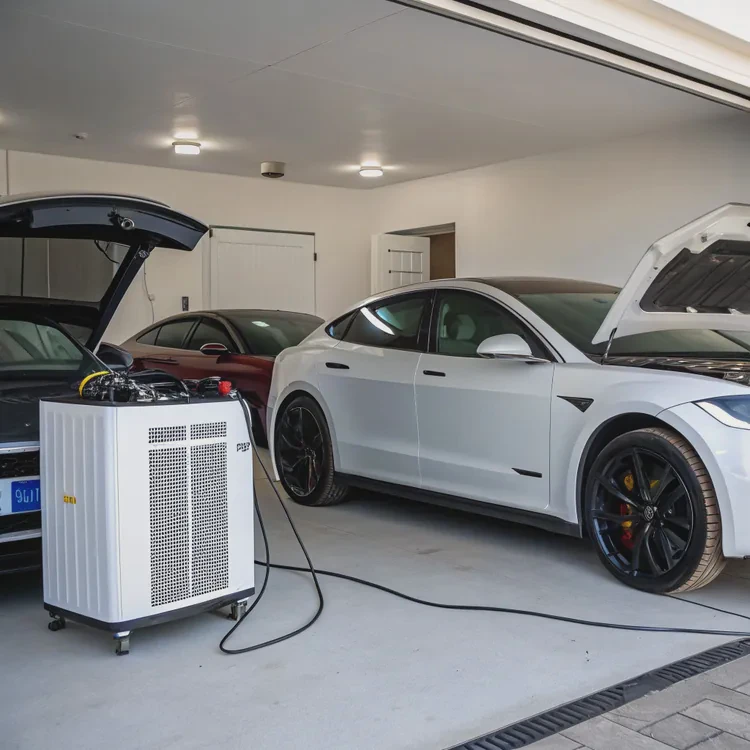
High-speed DC charging generates a lot of heat. A liquid cooling system quickly removes this heat, allowing the battery to sustain higher charging rates safely.
For example, the Porsche Taycan can charge from 5% to 80% in about 20 minutes — made possible by its liquid-cooled 800V battery system.
3. Longer battery lifespan
Extreme heat accelerates battery degradation. Liquid cooling reduces this stress, meaning EVs maintain capacity and range for more years.
Tesla’s thermal systems are known to help retain 90% battery capacity after hundreds of thousands of kilometers.
4. Consistent performance in any climate
Whether driving through a cold winter or a desert summer, liquid cooling helps preheat or cool the battery. Systems can automatically warm up coolant before charging in cold conditions.
5. Improved safety
Overheated cells can lead to thermal runaway — a dangerous chain reaction. Liquid cooling minimizes this risk by evenly distributing heat across the battery pack.
Key advantages summary
| Benefit | Description |
|---|---|
| Fast Charging | Allows high C-rate charging safely. |
| Longevity | Prevents cell degradation from heat. |
| Performance Stability | Keeps range and power consistent. |
| Climate Control | Works in hot and cold weather. |
| Safety | Reduces overheating and fire risk. |
In short, liquid cooling not only makes EVs faster and more efficient — it also makes them safer and longer-lasting.
How do EV manufacturers implement it?
Each automaker has its own engineering approach, but the goal is always the same: keep the battery pack evenly cool while minimizing energy use.
EV manufacturers implement liquid cooling using integrated coolant channels, heat exchangers, and smart thermal management systems that control temperature in real time.
1. Cooling plates under the cells
Manufacturers like Tesla and Nissan embed flat metal plates with internal coolant channels directly beneath battery cells. These plates ensure uniform cooling and reduce thermal gradients between modules.
2. Coolant loop design
A closed-loop system moves coolant from the battery to the radiator. Some vehicles, such as the Audi e-tron, combine motor, inverter, and battery cooling into a single shared loop for better efficiency.
3. Temperature sensors and control algorithms
Temperature sensors inside the battery pack constantly monitor conditions. The Battery Thermal Management System (BTMS) uses algorithms to adjust pump speeds and valve positions to maintain ideal temperatures.
4. Integration with HVAC
Modern EVs often integrate the battery cooling system with the cabin’s air conditioning circuit. This shared system allows for:
- Heat reuse to warm the cabin in winter.
- Coolant preconditioning before fast charging.
- Energy efficiency improvements by using one refrigerant cycle for multiple systems.
5. Active preconditioning
Before a long trip or high-speed charging, many EVs automatically precondition their batteries. Tesla, for example, heats or cools the pack as you navigate to a Supercharger, ensuring it’s at the ideal temperature when you arrive.
Examples of EVs with liquid-cooled batteries
| Brand | Model | Cooling Type | Key Feature |
|---|---|---|---|
| Tesla | Model S / Model 3 / Model Y | Glycol liquid loop | Smart preconditioning |
| Porsche | Taycan | Liquid-cooled 800V pack | 270 kW fast charging |
| Nissan | Ariya | Integrated liquid baseplate | Thermal balance and fast charging |
| Audi | e-tron / e-tron GT | Liquid loop | Combined drive and battery cooling |
| Kia | EV6 / Niro EV | Liquid system | Efficient thermal management |
| BMW | i4 / iX | Refrigerant-based liquid | Advanced fast charging and climate performance |
My personal takeaway
When I tested a Tesla Model 3 in summer, the difference was obvious. Even after multiple fast charges, performance stayed consistent, while an older air-cooled EV I drove years earlier throttled power after one session. That’s the power of smart liquid cooling.
What trends drive EV cooling innovation?
As EVs get faster, charge quicker, and pack more energy, thermal management must evolve too. Manufacturers are pushing innovation to make cooling systems more efficient, compact, and intelligent.
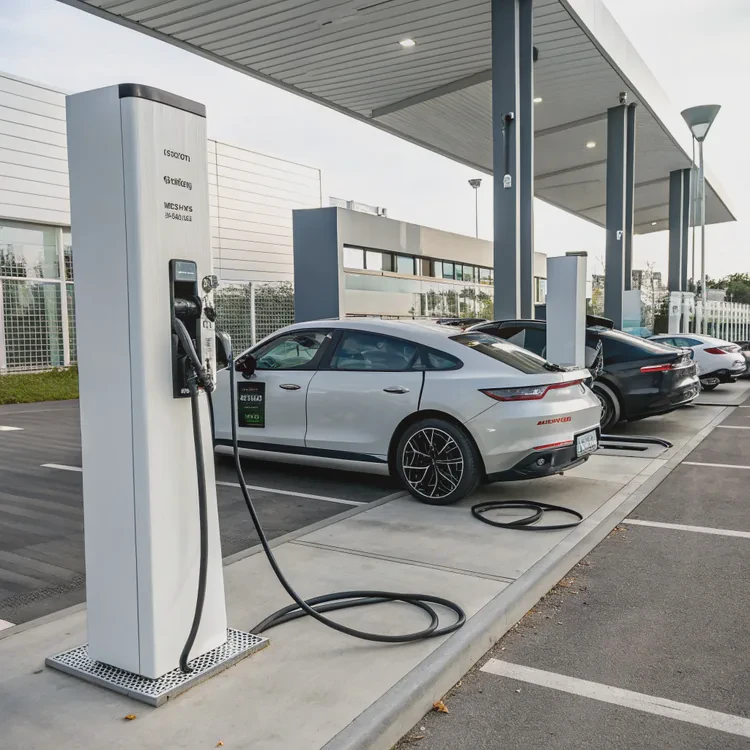
The latest EV cooling trends focus on hybrid systems, AI-based control, lightweight materials, and sustainability — all aimed at improving performance while reducing energy use.
1. Hybrid cooling technologies
Future systems may combine liquid cooling with phase-change materials (PCM) or microchannel cooling plates. These designs improve heat transfer while reducing system weight and volume.
2. Integrated thermal networks
Instead of separate loops for the motor, battery, and cabin, many EVs now use a unified cooling system. This reduces components, simplifies manufacturing, and improves energy efficiency.
3. AI and predictive control
Next-generation thermal management systems use machine learning to predict driving behavior, ambient conditions, and charging schedules. This allows pre-emptive heating or cooling before the battery even reaches critical temperatures.
4. High-voltage and ultra-fast charging systems
The rise of 800V architectures (seen in Porsche Taycan and Hyundai Ioniq 5) demands advanced cooling capable of handling higher currents and heat flux. New materials like graphene-enhanced coolants are being tested to handle this challenge.
5. Lightweight materials and modular packs
Manufacturers are using aluminum extrusions, composite cooling plates, and flexible tubing to reduce mass and improve heat distribution. Modular packs also simplify manufacturing and maintenance.
6. Eco-friendly coolants
Environmental regulations are driving the development of biodegradable and low-toxicity coolants, replacing traditional glycol-based fluids. These reduce ecological impact without sacrificing thermal efficiency.
7. Battery-to-vehicle thermal reuse
Some advanced systems now reuse waste heat from the battery to warm the cabin or improve efficiency in cold climates — a concept that improves range without increasing energy demand.
Cooling innovation trend summary
| Trend | Benefit | Description |
|---|---|---|
| Hybrid Cooling (Liquid + PCM) | Higher efficiency | Combines conductive and phase-change cooling. |
| Integrated Loops | Energy saving | Shared coolant for all systems. |
| AI Thermal Control | Predictive performance | Adapts to driving and climate. |
| High-Voltage Ready | Faster charging | 800V+ systems need enhanced cooling. |
| Eco Coolants | Sustainability | Low-toxicity, recyclable fluids. |
Looking ahead
Future EVs may feature solid-state batteries with built-in cooling microstructures or self-regulating nano-fluids that adapt in real time. These technologies will make liquid cooling even more compact, efficient, and automated.
Conclusion
Liquid cooling has become the standard for modern electric vehicles because it ensures performance, safety, and longevity. From Tesla’s precision glycol loops to Nissan’s integrated baseplate systems, the technology enables fast charging, stable performance, and long battery life.
As innovation continues, expect EVs to feature smarter, lighter, and more eco-friendly cooling systems — proving that the future of mobility is not just electric, but also efficiently cooled.
TAGS
Latest Articles

Volume discount levels for heat sink orders?
Buyers often ask when heat sink prices start to drop with volume. Many worry they’re overpaying for small orders. This guide explains how B2B volume pricing works for thermal components. Heat sink
21 Dec,2025
Heat sink long-term supply contract options?
Many buyers want stable pricing and reliable delivery for heat sinks. But without a clear contract, risks grow over time. This article explores how to secure better long-term supply deals. Long-term
21 Dec,2025
Tooling cost for new heat sink profiles?
Many engineers struggle to understand why tooling for custom heat sinks costs so much. They worry about budgeting and production timelines. This article breaks down the cost drivers behind tooling.
21 Dec,2025
Heat sink custom sample process steps?
Sometimes, starting a custom heat sink project feels overwhelming—too many steps, too many unknowns, and too many risks. You want a sample, but not endless delays. The process for requesting and
20 Dec,2025
Standard B2B terms for heat sink payments?
When buyers and sellers in B2B heat sink markets talk about payment, many don’t fully understand what’s standard. This can lead to delayed orders, miscommunication, and even lost business
20 Dec,2025
Heat sink pricing factors for large orders?
Heat sinks are vital for many systems. When prices rise, projects stall and budgets break. This problem can hit teams hard without warning. Large order heat sink pricing depends on many factors. You
20 Dec,2025Related Articles
- Where to put liquid cooling radiator?
- How to change water cooling liquid?
- Is liquid cooling more expensive?
- Does liquid cooling need thermal paste?
- Does stirring cool down liquid?
- Is liquid cooler better than air cooler?
- Does the Ryzen 7 7800X3D need liquid cooling?
- How liquid CPU cooler works?
- Is CPU liquid cooling worth it?
- What is liquid cool technology?
- How Good Is Liquid Cooling?
- Does Liquid Cooling Run Out?
Author
Dr. Emily Chen
Chief AI Researcher
Leading expert in thermal dynamics and AI optimization with over 15 years of experience in data center efficiency research.
Categories
Latest Products






Recommend Categories
- Liquid cooling plate Manufacturer
- Industrial Heat Sink Manufacturer
- Standard Heat Sink Manufacturer
- Aluminum Heat Sink Manufacturer
- Copper Heat Sink Manufacturer
- Anodized Heatsink Manufacturer
- Stamping heat sink Manufacturer
- Die Casting Heatsink Manufacturer
- Soldering heat sink Manufacturer
- CNC Parts Manufacturer
Latest Products
- Wholesale Aluminum Radiator
- Water Cooling Plate Kit
- Water Cooling Heat Sink
- Water Cooling Heat Sink Kit
- Stainless Steel Water Distributor
- Server Water Cooling Plate Kit
- Server Liquid Cooling System
- Server Aluminum Cooling Kit
- S19 Full Cover Cooling Plate
- S19 Cooling Plate Kit
- S19 Aluminum Cooling Plate
Contact Expert
Have questions about this article? Reach out to our experts directly.