How thin can Vapor Chamber be?
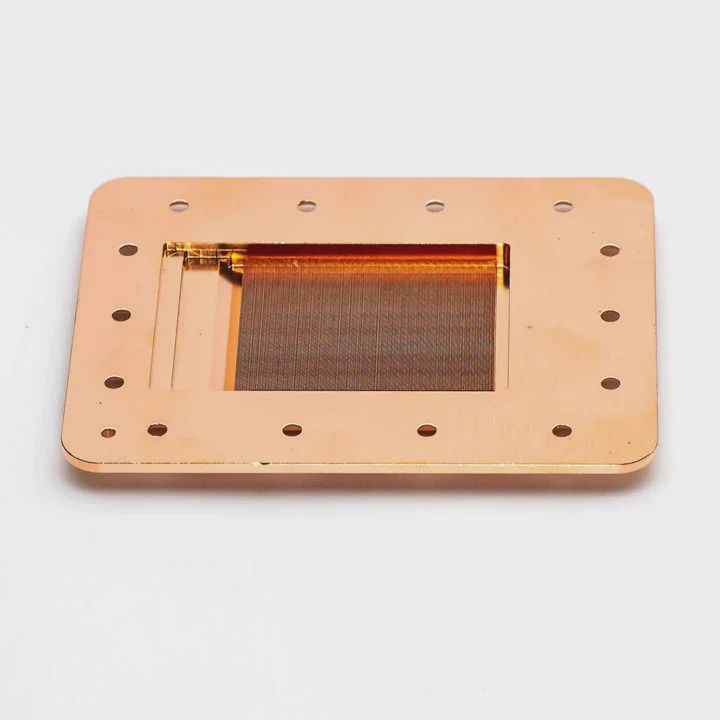
Devices get thinner and lighter but heat remains. Can vapor chambers shrink too, without losing cooling power?
Yes. Vapor chambers can be made very thin — a few millimeters thick — and still provide useful heat spreading for compact electronics.
We explore how thin vapor chambers can get, and what trade‑offs come with ultra‑thin designs.
What is the minimum possible thickness of a Vapor Chamber?
Tiny gadgets leave little room for cooling. Could a vapor chamber be almost paper‑thin?
Most commercial vapor chambers reach about 1.0–2.0 mm thickness. Ultra‑thin research models push below 1.0 mm.
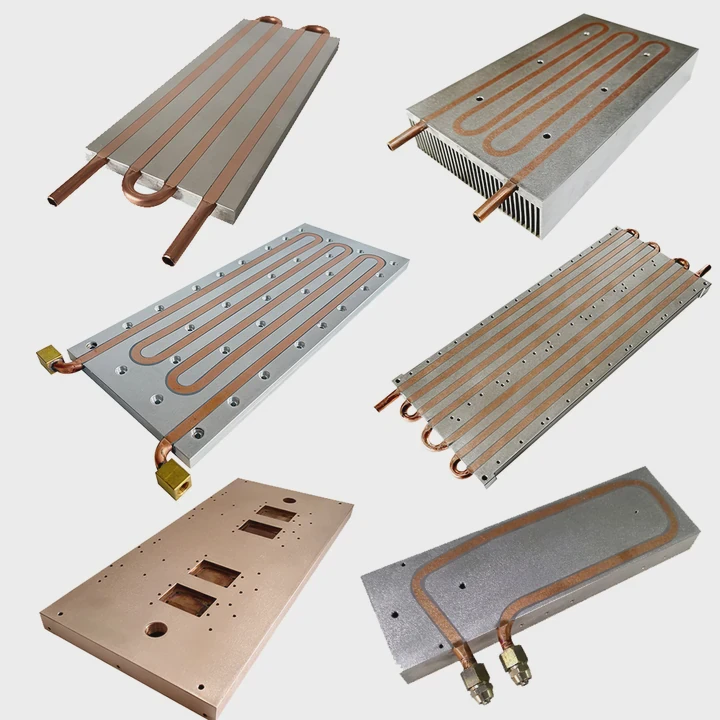
In standard manufacturing, a vapor chamber is made by sealing a flattened metal plate around internal wick and a small volume of working fluid (often water or alcohol mixture). The outer shell thickness, internal wick, and internal fluid gap must all fit inside the chamber. For reliable function, the chamber must sustain internal pressure, wick integrity, and allow fluid to evaporate and condense.
A typical vapor chamber used in laptops or small electronics has total thickness around 1.5–2.5 mm. Some specialized ultra‑thin variants go down to ~0.8–1.2 mm. At that thickness range, internal wick layers might be thinner or use micro‑structures, and the shell metal is thinner too.
Pushing thinner than ~0.7–0.8 mm becomes very challenging. Below that, the metal shell gets too weak to hold vacuum or internal pressure reliably; manufacturing yield drops, and deformation risk rises. Thus the practical minimum for production‑ready vapor chambers seems around 0.8–1.0 mm.
Do ultra-thin designs affect durability?
Slim looks are attractive. But can a super‑thin vapor chamber live long in real use?
Yes. Ultra‑thin vapor chambers can remain durable if design accounts for pressure stress, metal fatigue, and handling during assembly.
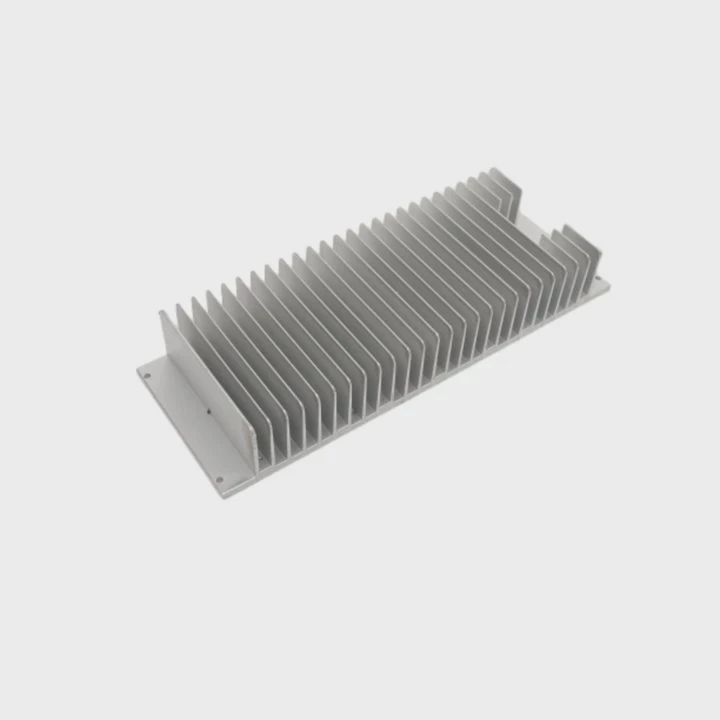
Durability challenges for thin chambers
Thin chambers face several stress sources:
- Internal pressure changes as fluid evaporates and condenses.
- External mechanical pressure or bending when mounting inside devices.
- Thermal cycling stress when heating and cooling repeatedly during operation.
If metal is too thin, or wick structure too fragile, deformation may occur. That can break vacuum seal or cause fluid leakage or wick detachment. Over time, performance drops.
Manufacturers mitigate this by using stronger metal alloys, reinforcing edges, or applying stiffening ribs on the outer shell. They may also choose high‑strength solder joints or seam welds that tolerate stress.
Real-world reliability
| Test type | What is tested | Typical result for thin chamber |
|---|---|---|
| Thermal cycling | Repeated heat‑up and cool‑down cycles (e.g. 1000 cycles) | Temperature spread remains within spec, no leak |
| Mechanical stress | Pressure or bending during assembly | No permanent deformation with reinforced edges |
| Long run operation | Continuous load over months | Heat spreading stable, no performance drop |
With proper design and quality control, a vapor chamber of ~1.0 mm thickness can pass all these tests. That makes ultra‑thin chambers viable for long‑term use in compact devices.
Can thin chambers support high heat loads?
Thin looks good. But can thin vapor chambers still move large heat amounts?
They can support moderate loads (tens of watts), but very high heat flux requires thicker or multiple chambers.
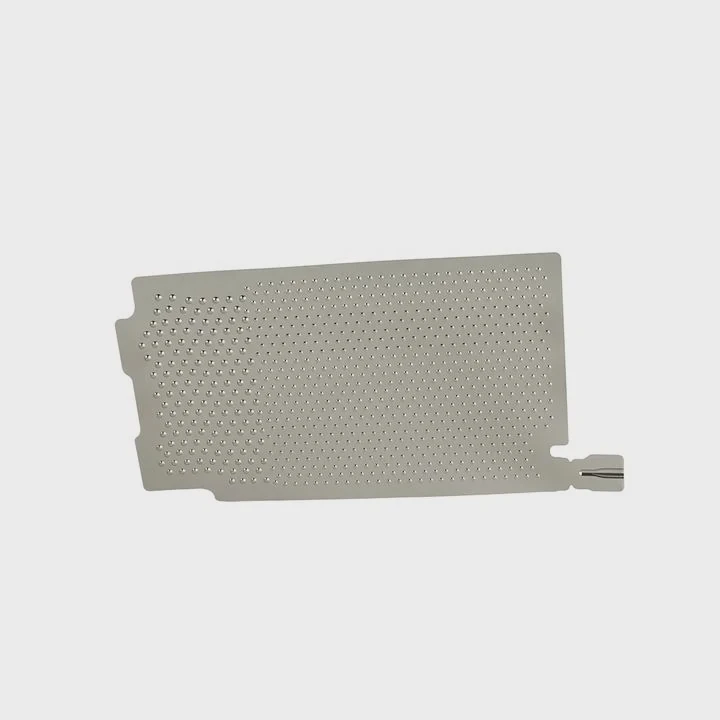
Heat transport in a thin vapor chamber
Vapor chamber performance depends on internal fluid circulation, evaporator–condenser path length, wick conductivity, and contact area. Thin chambers reduce fluid volume and wick thickness. That can limit how much vapor can flow, and how fast heat can move.
Often thin chambers handle up to ~20–40 W safely in small devices like laptops, tablets, or compact edge boxes. For moderate power densities (e.g. 5–15 W/cm² at hot spots), they can keep temperatures under control when paired with a metal chassis or heatsink fins.
When power gets high
For high heat loads (50–100 W or more), thin chambers may struggle. Two main limits:
- Insufficient working fluid volume — not enough evaporated vapor to remove heat fast.
- Weak condenser path — thin shell and wick cannot spread and condense vapor evenly, leading to hotspots or dry‑out.
In those cases designers often use thicker vapor chambers (2–4 mm), or stack multiple chambers, or add active cooling (fans, heat pipes).
Example comparison
| Cooling setup | Thickness | Heat load handled | Typical use case |
|---|---|---|---|
| Thin vapor chamber only | ~1.0–1.5 mm | ~15–35 W | Tablets, thin laptops, compact network devices |
| Thick vapor chamber | ~2.5–4.0 mm | ~40–80 W | Gaming laptops, mini‑PCs, edge servers |
| Multiple thin chambers / hybrid | several ×1.2 mm | ~50–100 W | Small servers, dense computing boxes |
Thin chambers give good performance for light to medium loads. For heavy loads, one needs larger or multiple chambers or extra cooling.
What limits further reduction in thickness?
Shrinking more is tempting. But many physical and manufacturing limits block that.
The limits include metal shell strength, wick thickness, fluid volume, sealing reliability, and manufacturability.
Key limiting factors
Shell strength and sealing
If metal shell is too thin, it may deform under internal vacuum or pressure. That can break the seal or warp the chamber. High vacuum sealing quality depends on metal rigidity.
Wick structure and capillary action
Wicks inside chamber must wick fluid back to the hot spot. Very thin wicks may not provide reliable capillary action. That reduces fluid return and causes dry‑out under load.
Fluid volume and vapor path
Evaporation needs enough fluid. Thin chamber reduces fluid volume. That reduces total latent heat capacity. Vapor path may also become too short or congested, lowering heat transfer efficiency.
Manufacturing yield and cost
Very thin chambers require high‑precision forming, welding or soldering. Yield falls, defects increase. Costs go up. For mass production, there is a practical lower limit before cost becomes too high.
Thermal expansion and fatigue
Thin metal expands and contracts more per thickness ratio during thermal cycles. Over time, that causes metal fatigue or micro‑leaks.
Where engineers draw the line
Most engineers now view ~0.8 mm as the practical lower bound for commercial thin vapor chambers. Below that, reliability and performance become hard to guarantee. Instead of thinner shells, they use alternate cooling like heat pipes, thin spreaders, or active cooling.
Summary table
| Limiting factor | Effect when too thin | Outcome |
|---|---|---|
| Shell rigidity | Shell deforms under pressure | Leak, deformation, failure |
| Wick capillary strength | Fluid fails to return | Dry‑out, overheating |
| Fluid volume | Less heat capacity | Lower heat load capacity |
| Manufacturing complexity | Defects, low yields | High cost or scrap |
| Thermal fatigue | Metal cracks over cycles | Long‑term failure |
Because of these limits, ultra‑thin vapor chambers stay at about 0.8–1.2 mm. Beyond that is risky for real products.
Conclusion
Ultra‑thin vapor chambers (about 0.8–1.5 mm thick) can work well for compact devices with light to medium heat loads. They remain durable if designed carefully. But they struggle with high heat, and physical limits mean they cannot go much thinner. Designers must balance thinness with reliability and performance.
TAGS
Latest Articles

Volume discount levels for heat sink orders?
Buyers often ask when heat sink prices start to drop with volume. Many worry they’re overpaying for small orders. This guide explains how B2B volume pricing works for thermal components. Heat sink
21 Dec,2025
Heat sink long-term supply contract options?
Many buyers want stable pricing and reliable delivery for heat sinks. But without a clear contract, risks grow over time. This article explores how to secure better long-term supply deals. Long-term
21 Dec,2025
Tooling cost for new heat sink profiles?
Many engineers struggle to understand why tooling for custom heat sinks costs so much. They worry about budgeting and production timelines. This article breaks down the cost drivers behind tooling.
21 Dec,2025
Heat sink custom sample process steps?
Sometimes, starting a custom heat sink project feels overwhelming—too many steps, too many unknowns, and too many risks. You want a sample, but not endless delays. The process for requesting and
20 Dec,2025
Standard B2B terms for heat sink payments?
When buyers and sellers in B2B heat sink markets talk about payment, many don’t fully understand what’s standard. This can lead to delayed orders, miscommunication, and even lost business
20 Dec,2025
Heat sink pricing factors for large orders?
Heat sinks are vital for many systems. When prices rise, projects stall and budgets break. This problem can hit teams hard without warning. Large order heat sink pricing depends on many factors. You
20 Dec,2025Related Articles
- How to assemble Vapor Chamber prototypes?
- Vapor Chamber heat spreading efficiency?
- Vapor Chamber ducting requirements?
- New techniques for Vapor Chamber processing?
- Vapor Chamber used in military-grade devices?
- How to scale Vapor Chamber production?
- Vapor Chamber support for AI chips?
- Vapor Chamber impact on GPU performance?
- Best joining method for Vapor Chamber?
- Vapor Chamber lifecycle assessment data?
- Environmental impact of Vapor Chamber disposal?
- Vapor Chamber use in hydrogen energy systems?
Author
Dr. Emily Chen
Chief AI Researcher
Leading expert in thermal dynamics and AI optimization with over 15 years of experience in data center efficiency research.
Categories
Latest Products






Recommend Categories
- Liquid cooling plate Manufacturer
- Industrial Heat Sink Manufacturer
- Standard Heat Sink Manufacturer
- Aluminum Heat Sink Manufacturer
- Copper Heat Sink Manufacturer
- Anodized Heatsink Manufacturer
- Stamping heat sink Manufacturer
- Die Casting Heatsink Manufacturer
- Soldering heat sink Manufacturer
- CNC Parts Manufacturer
Latest Products
- Wholesale Aluminum Radiator
- Water Cooling Plate Kit
- Water Cooling Heat Sink
- Water Cooling Heat Sink Kit
- Stainless Steel Water Distributor
- Server Water Cooling Plate Kit
- Server Liquid Cooling System
- Server Aluminum Cooling Kit
- S19 Full Cover Cooling Plate
- S19 Cooling Plate Kit
- S19 Aluminum Cooling Plate
Contact Expert
Have questions about this article? Reach out to our experts directly.