How to choose Vapor Chamber thickness?
Thermal problems hit many designs hard. Engineers often guess the right thickness for a vapor chamber. Guessing wrong can lead to overheating, high cost, or wasted material. A clear method is needed to pick thickness right for each use case.
Choosing the correct vapor‑chamber thickness depends on heat load, thermal distribution, mechanical strength, and manufacturability. A well‑chosen thickness balances heat transfer, weight, cost, and reliability.
Below I show how to judge thickness based on real needs, standard practices, and simulation guidance.
What factors determine optimal Vapor Chamber thickness?
Designers often focus only on heat flow. But many other factors matter.
Optimal thickness depends on heat flux, chip size, allowed temperature rise, mechanical stress, integration constraints, and cost. A trade‑off among all those determines the best choice.
Vapor‑chamber thickness does not just affect thermal performance. It influences rigidity, weight, manufacturing yield, and cost. The “best” thickness balances those.
Important Factors to Consider
Heat flux and density
When chips or modules generate high power per area, thin walls may overheat or dry out the wick. A thicker body helps store and spread heat. But too thick will add weight and cost.
Internal wick and vapor volume
Thinner chambers limit the space for wick and vapor. That can reduce capillary return and lower performance. For high‑power load, enough volume is needed for liquid/vapor circulation.
Mechanical stress and deformation risk
Thin chambers are easier to deform under external pressure or stack pressure (in assemblies, e.g., pressing a lid). If deformation occurs, wick contact may break, or internal volume may collapse. Thicker walls give more mechanical strength.
Size constraints and form factor
Portable devices demand thin and light cooling. That pushes toward thinner chambers. But compact size must still meet thermal needs. If thickness is limited, wick design or alternative cooling may be needed.
Cost, material use, and manufacturability
Thicker plates use more material and cost more. Also, welding or brazing thicker plates can cause warping. Manufacturing yield may drop. On the other hand, very thin plates might leaks or be fragile, which increases re‑work costs.
Thermal spreading distance
If the heat source is small and centralized, a thicker plate can help spread heat over a wider area before fins or a heat sink. For wide or multiple heat sources, the chamber must balance spreading and thickness.
Environment and external forces
If the device will face vibration, shock, or external pressure (e.g. in automotive or rugged systems), thicker chambers with stronger casing are safer.
Example Thickness‑Decision Table
| Use Case / Constraint | Recommended Thickness Range | Reason / Note |
|---|---|---|
| Slim laptop (tight z‑height) | 0.8 – 1.5 mm | Minimal height, moderate heat |
| Gaming laptop / GPU module | 1.2 – 2.0 mm | High heat flux, need wick volume and stiffness |
| Server blade / high power chip | 1.5 – 3.0 mm | High heat, lots of vapor volume, spread heat widely |
| EV power module / battery pack | 2.0 – 4.0 mm | High current, strong mechanical demands |
| Industrial / rugged equipment | 2.0 – 5.0 mm | Mechanical strength, vibration resistance |
This table is simplified. Real design must consider actual power, geometry, and thermal budget.
Balancing the Trade‑offs
When modeling a design, check these:
- Maximum allowable surface temperature
- Size constraints (height, footprint)
- Thermal resistance target (junction‑to‑ambient)
- Mechanical constraints (pressure, thickness, deformation)
- Cost and manufacturability limits
Only after checking all the constraints can you pick a reasonable thickness. Then you verify with simulation or prototype testing.
That approach reduces risk and avoids repeated trial‑and‑error, especially when design budgets or product constraints are tight.
Does heat load dictate plate thickness?
Many engineers start with heat load. That is reasonable — but not sufficient alone.
Heat load plays a key role: higher power or higher flux tends to push thickness upward. But thickness must also balance with other constraints like form factor, wick design, and mechanical needs.
Heat load (total watts) and heat flux (watts per area) directly affect how much thermal transport and vapor-liquid cycling is required. If your chip dumps 150 W into a small area, you need enough wick volume and vapor space. A thin plate with small wick may fail due to dry‑out or hotspot build‑up.
Why heat load matters
- High heat load means larger evaporation rate. Wick must supply liquid fast enough. That requires good wick structure and enough fluid volume. Thicker chambers can support bigger wick and more fluid reservoir.
- High heat flux increases demand on thermal spreading. Thicker plates often offer better internal spreading before fins or external heat spreaders.
- High or variable load benefits from robust chamber geometry. Thermal cycling, hotspots, and transient spikes stress the chamber. A thicker plate handles repeated expansion and contraction better.
But heat load is not the only answer
If you design a thin device (like a slim notebook), you cannot just increase thickness. You may instead improve wick structure — for example adopt metal mesh, sintered wick, or micro‑grooved wick — or accept slightly higher thermal resistance. That trade may be acceptable depending on performance targets.
Also, for low-power devices — say a smartphone with modest heat — a thin chamber may suffice even if it has small surface area. Over‑thickening wastes material and adds weight.
Another dimension is geometry. If the heat source is offset or is spread over several discrete zones, thickness alone might not help. Instead, wick design, vapor pathways, and chamber layout matter more.
Practical steps when heat load is known
- Estimate power and flux (W or W/cm²).
- Estimate required thermal resistance (junction‑to‑ambient).
- Assess height and space constraints.
- Choose balanced thickness + wick + filler fluid volume combination.
- Prototype or simulate.
Relying only on heat load may lead to over‑design (excess thickness) or under‑performance (insufficient wick/vapor space). A balanced approach works better.
Are standard thickness options available?
Manufacturers and thermal‑module suppliers often pre‑define a few standard thicknesses for vapor chambers. That simplifies design and reduces lead time.
Yes. There are common standard thickness choices. They serve as baseline options. From there, engineers can customize as needed.
Many thermal‑management vendors supply vapor chambers in these common thickness ranges:
- Ultra‑thin: 0.8 – 1.2 mm — for slim laptops, ultra‑portable devices
- Mid‑range: 1.5 – 2.5 mm — for gaming laptops, consumer GPUs, moderate heat
- Heavy‑duty: 2.5 – 4.0 mm — for servers, high‑power modules, industrial use
These standard options reflect typical balance between thermal performance, mechanical robustness, manufacturability, and cost.
Advantages of standard thicknesses
- Faster procurement and shorter lead time: Suppliers can produce quickly without special setup.
- Lower cost: Standard tooling and repeated processes lower unit cost.
- Reliable performance: Established wick and internal design optimized for those thicknesses gives predictable results.
- Easier qualification: Standard parts easier to test and qualify, with existing data.
When standard options are not ideal
Sometimes the design requires:
- Very thin profile — thinner than 0.8 mm — for ultra‑slim devices or tight enclosures.
- Very thick casing — thicker than 4 mm — for rugged industrial or heavy‑power modules.
- Custom shape or internal layout — multiple heat sources, non‑planar surfaces, unusual dimensions.
In those cases, custom thickness and design is needed. That requires deeper collaboration with thermal‑module suppliers or in‑house manufacturing and design teams.
Typical Standard Thickness Table
| Thickness Category | Typical Applications | Pros | Cons |
|---|---|---|---|
| Ultra‑thin (0.8–1.2 mm) | Slim laptops, tablets, portable devices | Low profile, light, low cost | Limited heat flux, thinner wick |
| Mid‑range (1.5–2.5 mm) | Gaming laptops, mid‑power devices, servers | Balanced thermal & size, reliable | Moderate cost and weight |
| Heavy‑duty (2.5–4.0 mm) | Servers, EV modules, industrial, power electronics | High heat load capacity, strong casing | Higher cost, heavier, bulkier |
Standard thicknesses work when design constraints match their typical use cases. Otherwise, custom sizing is needed.
Can simulations help choose proper thickness?
Blind guesswork often fails when reality hits. Simulations give boundary conditions and show limitations before building hardware.
Yes. Thermal and mechanical simulations help determine optimal vapor chamber thickness by modeling heat flux, temperature distribution, vapor/liquid behavior, and stress under load.
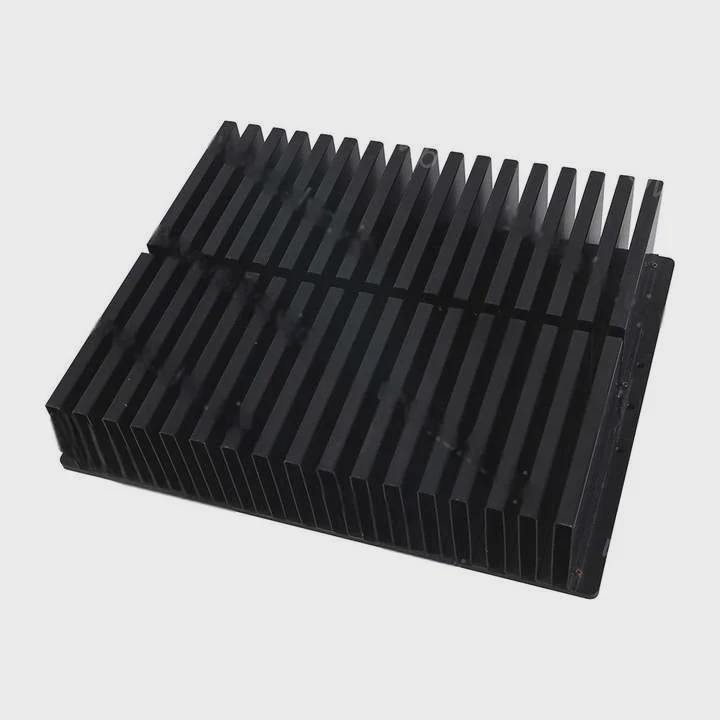
Simulation lets designers test many thickness, wick, and layout combinations quickly. It also highlights weak spots — dry‑out areas, hotspots, stress concentration, potential failure zones — before costly prototypes.
What types of simulation help
Thermal simulation (CFD / FEA)
Computational Fluid Dynamics (CFD) or Finite Element Analysis (FEA) can model heat flow, vapor behavior, liquid return, and cold spots. It reveals how well a given thickness with a particular wick and filler fluid works under expected load. It shows temperature spread, maximum internal temperature, and thermal resistance.
Stress and deformation simulation
Using FEA elastic or plastic analysis, one can model pressure, external load, vibration, and thermal expansion. That helps verify whether casing with a given thickness will deform or leak under mechanical stress, thermal cycles, or pressure differential.
Transient thermal cycling simulation
Real devices go through cycles of power on/off, bursts, ambient changes. Simulation can show how the chamber performs over many cycles — whether the wick dries out, whether condensate returns reliably, whether thermal performance degrades.
Multi‑physics simulation
Combines thermal flow, fluid phase change, mechanical stress, possibly electromagnetic interference (for RF-sensitive devices). This gives a holistic view and highlights trade‑offs.
Benefits and Limitations of Simulation
| Benefit | Limitation / Challenge |
|---|---|
| Fast evaluation of multiple designs | Requires accurate material and wick data |
| Cost‑effective before prototypes | Simulation may not capture all real‑world effects |
| Helps narrow design space | Simplified models may omit complex flow behavior |
| Allows parametric studies (thickness, wick, fluid) | Need specialized software and skilled engineers |
Simulations give strong guidance. They help avoid unworkable designs. But they cannot replace prototypes entirely — real testing is still necessary.
Recommended Workflow Using Simulations + Prototypes
- Define power load, geometry, constraints.
- Build simulation model with realistic material, wick, and fluid properties.
- Run multiple thickness and wick design variants.
- Shortlist 2–3 design candidates.
- Build prototypes of those candidates.
- Test thermal performance, leak tightness, mechanical resilience.
- Use real data to refine simulation model for final design.
This workflow reduces time, cost, and risk. It helps avoid over‑engineering or under‑performance.
Conclusion
Choosing vapor chamber thickness is not one‑size‑fits‑all. Designers must weigh heat load, form factor, mechanical constraints, and manufacturability. Standard thicknesses offer good defaults, but many designs require custom sizing. Simulation tools combined with careful prototype testing give the best path. With this approach, vapor chambers can deliver efficient cooling, reliability, and balanced cost for many applications.
TAGS
Latest Articles

Volume discount levels for heat sink orders?
Buyers often ask when heat sink prices start to drop with volume. Many worry they’re overpaying for small orders. This guide explains how B2B volume pricing works for thermal components. Heat sink
21 Dec,2025
Heat sink long-term supply contract options?
Many buyers want stable pricing and reliable delivery for heat sinks. But without a clear contract, risks grow over time. This article explores how to secure better long-term supply deals. Long-term
21 Dec,2025
Tooling cost for new heat sink profiles?
Many engineers struggle to understand why tooling for custom heat sinks costs so much. They worry about budgeting and production timelines. This article breaks down the cost drivers behind tooling.
21 Dec,2025
Heat sink custom sample process steps?
Sometimes, starting a custom heat sink project feels overwhelming—too many steps, too many unknowns, and too many risks. You want a sample, but not endless delays. The process for requesting and
20 Dec,2025
Standard B2B terms for heat sink payments?
When buyers and sellers in B2B heat sink markets talk about payment, many don’t fully understand what’s standard. This can lead to delayed orders, miscommunication, and even lost business
20 Dec,2025
Heat sink pricing factors for large orders?
Heat sinks are vital for many systems. When prices rise, projects stall and budgets break. This problem can hit teams hard without warning. Large order heat sink pricing depends on many factors. You
20 Dec,2025Related Articles
- Vapor Chamber use in hydrogen energy systems?
- Environmental impact of Vapor Chamber disposal?
- Vapor Chamber lifecycle assessment data?
- Best joining method for Vapor Chamber?
- Vapor Chamber impact on GPU performance?
- Vapor Chamber support for AI chips?
- Does Vapor Chamber increase performance stability?
- Vapor Chamber for handheld electronics?
- Can Vapor Chamber reduce overheating issues?
- Vapor Chamber bonding adhesive requirements?
- Typical porosity limits for Vapor Chamber material?
- Vapor Chamber for flexible electronics?
Author
Dr. Emily Chen
Chief AI Researcher
Leading expert in thermal dynamics and AI optimization with over 15 years of experience in data center efficiency research.
Categories
Latest Products






Recommend Categories
- Liquid cooling plate Manufacturer
- Industrial Heat Sink Manufacturer
- Standard Heat Sink Manufacturer
- Aluminum Heat Sink Manufacturer
- Copper Heat Sink Manufacturer
- Anodized Heatsink Manufacturer
- Stamping heat sink Manufacturer
- Die Casting Heatsink Manufacturer
- Soldering heat sink Manufacturer
- CNC Parts Manufacturer
Latest Products
- Wholesale Aluminum Radiator
- Water Cooling Plate Kit
- Water Cooling Heat Sink
- Water Cooling Heat Sink Kit
- Stainless Steel Water Distributor
- Server Water Cooling Plate Kit
- Server Liquid Cooling System
- Server Aluminum Cooling Kit
- S19 Full Cover Cooling Plate
- S19 Cooling Plate Kit
- S19 Aluminum Cooling Plate
Contact Expert
Have questions about this article? Reach out to our experts directly.