Is air or liquid cooling better?
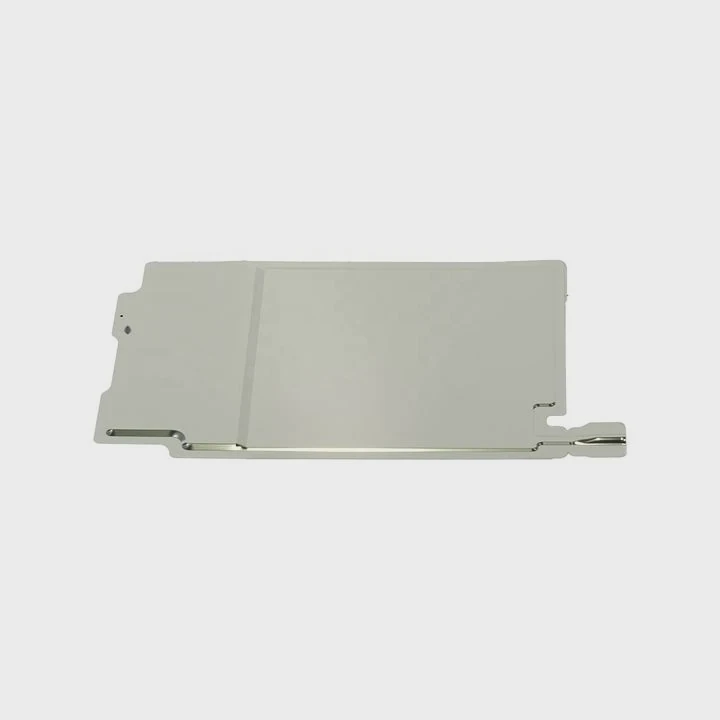
Choosing between air and liquid cooling is one of the most common questions in thermal design. Both methods work well, but the best choice depends on what your system needs most — simplicity or performance.
Liquid cooling is better for high-performance or compact systems, while air cooling is better for simple, low-power applications with open airflow.
In this article, I will explain the key differences, the advantages and disadvantages of each, how to choose the right one for your system, and what the latest efficiency trends look like.
What are the differences between air and liquid cooling?
Many people see air and liquid cooling as competing technologies, but they serve different purposes. Each transfers heat from hot components to the environment in its own way.
Air cooling uses fans and heat sinks to remove heat through airflow, while liquid cooling uses a fluid loop to absorb and move heat more efficiently.
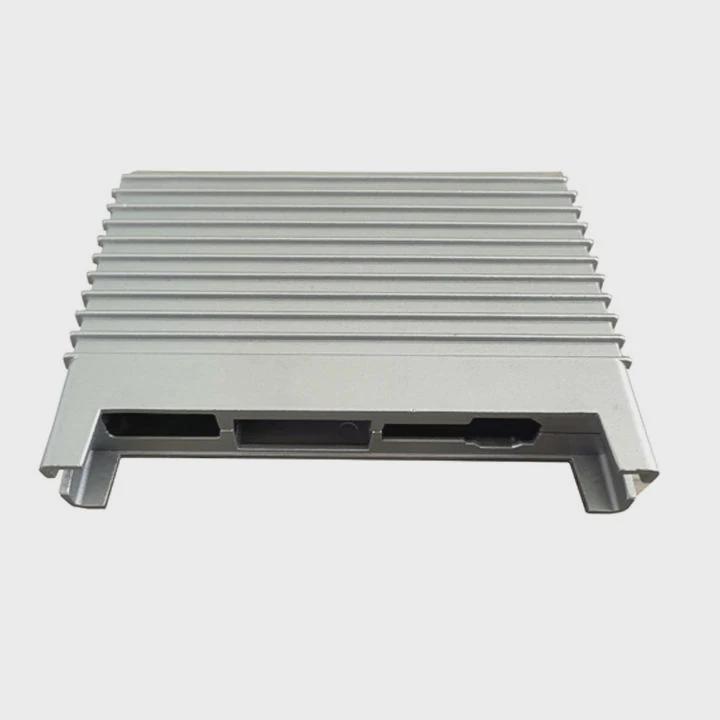
The core difference lies in the medium. Air is a poor heat conductor, while liquid has much higher thermal capacity. Because of this, liquid systems can handle more heat in smaller spaces.
Comparison Table
| Aspect | Air Cooling | Liquid Cooling |
|---|---|---|
| Cooling medium | Air | Liquid (water, glycol, or dielectric) |
| Heat transfer efficiency | Low to medium | High |
| System size | Larger | Compact |
| Noise level | Higher | Lower |
| Maintenance | Low | Moderate |
| Cost | Lower | Higher |
| Risk | Dust buildup | Leak potential |
Design Perspective
In air cooling, heat sinks rely on airflow to carry away heat. The system’s performance depends on the size of the fins and how fast fans can move air. In contrast, liquid systems use pumps and cold plates to absorb heat directly at the source. The liquid then transports heat to a radiator or heat exchanger.
When I first designed an inverter cooling system, I saw that air cooling worked only until power reached 1 kW. Above that, temperature kept rising fast. After switching to a liquid-cooled plate, temperatures stayed stable under 60 °C, even at 3 kW. This clearly showed me where each system works best.
What are the pros and cons of each?
Every cooling solution involves trade-offs between performance, cost, and complexity. Understanding these helps you choose wisely.
Air cooling is simple and affordable, but limited by heat capacity and noise. Liquid cooling is powerful and quiet, but costs more and needs careful design.
Let’s break it down clearly.
Pros and Cons Overview
| Category | Air Cooling | Liquid Cooling |
|---|---|---|
| Pros | Simple setup, lower cost, easy maintenance | High efficiency, quiet operation, compact, stable temperature |
| Cons | Noisy, limited cooling for high loads, dust accumulation | Higher cost, requires sealing, potential leaks, more complex |
Detailed Insights
Air cooling’s biggest strength is simplicity. It’s perfect for small systems, open spaces, or applications where maintenance is easy. However, it struggles when devices become denser. Fans also generate noise and lose efficiency over time as dust builds up.
Liquid cooling, on the other hand, provides powerful heat removal and uniform temperature control. It is quieter and works well in sealed environments, like EV battery packs or data centers. The main drawbacks are higher cost and the need for professional design to prevent leaks.
When I worked with an aerospace client, they first tried air-cooled modules to reduce cost. But vibration and altitude caused overheating and fan failures. After switching to liquid cooling with welded aluminum plates, the system ran flawlessly for five years. This confirmed that reliability often outweighs initial cost.
How to choose based on your system?
The right choice depends on how much heat your system generates, where it operates, and how much space you have.
Choose air cooling for low-power, open systems; choose liquid cooling for high-density, high-reliability, or noise-sensitive systems.
When selecting a cooling method, engineers consider power density, temperature limits, noise targets, and maintenance access. I usually start by comparing expected heat load and operating environment.
Selection Guide
| Criteria | Air Cooling | Liquid Cooling |
|---|---|---|
| Heat load | <150 W/cm² | >150 W/cm² |
| Operating noise | Moderate or unimportant | Must be low |
| Space | Large or open | Small or enclosed |
| Maintenance | Easy access | Limited access |
| Application | Consumer electronics, PCs, lighting | EVs, data centers, power converters, aerospace |
Real-world Scenarios
- Air cooling: Best for simple electronics like routers, projectors, and desktop PCs. Easy to install, cheap, and reliable.
- Liquid cooling: Ideal for EV batteries, industrial lasers, and semiconductors where heat must be tightly controlled.
I once visited a manufacturing plant using large fan-cooled control units. The noise exceeded 80 dB, and cooling was uneven. After switching to a closed-loop liquid cooling system, the noise dropped to 35 dB, and temperature stayed within ±2 °C across all modules. That level of consistency is impossible with air.
If your project values compactness, quietness, and precision temperature control, liquid cooling is the way to go. But if simplicity and cost are your priorities, air cooling remains a solid choice.
What are the trends in efficient cooling?
Cooling systems are evolving fast. Efficiency now means not only performance but also energy savings and environmental sustainability.
The latest trend is hybrid cooling—combining air and liquid systems with smart sensors to balance efficiency, reliability, and cost.
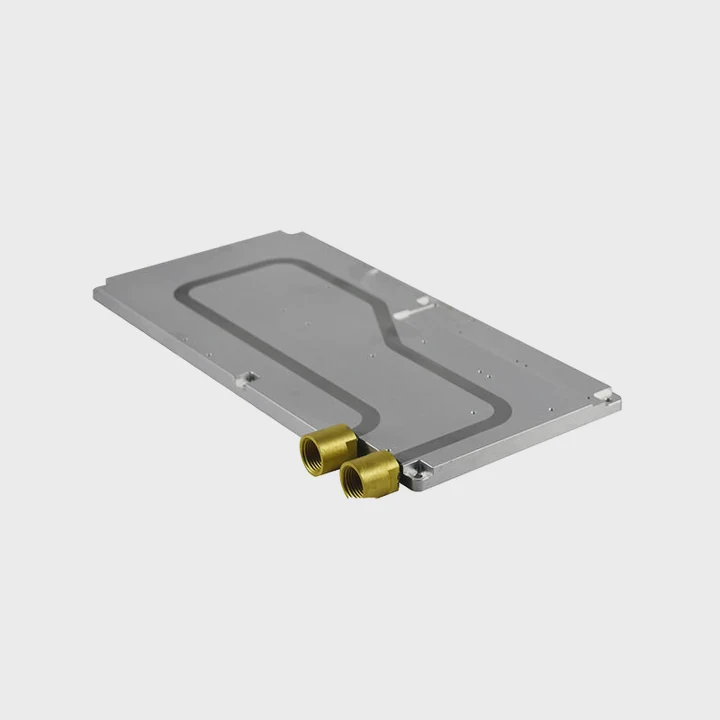
Industry Efficiency Trends
| Trend | Description | Benefit |
|---|---|---|
| Hybrid cooling | Mix of air and liquid systems | Balanced performance and cost |
| Dielectric fluids | Non-conductive, safe liquids | Prevent electrical risks |
| AI monitoring | Smart sensors and data analysis | Predictive maintenance |
| Sustainable materials | Recyclable metals, eco coolants | Lower carbon footprint |
| Immersion cooling | Fully submerged components | Maximum heat removal |
Future of Cooling Efficiency
Hybrid systems are now used in data centers and automotive systems. They use liquid cooling for core heat sources like CPUs or batteries and air cooling for peripheral components. This reduces total energy use by up to 30%.
In advanced factories, I’ve seen AI systems analyze temperature data to optimize pump speed and fan airflow. The system adjusts in real time, saving both power and water. This kind of smart cooling is the future.
Sustainability is another strong driver. Companies are replacing glycol-water mixtures with biodegradable fluids. Aluminum heat exchangers are replacing copper due to recyclability and lightweight design.
Looking Ahead
By 2030, most industrial and data center systems will use some form of liquid or hybrid cooling. Air-only systems will remain for low-power or consumer products. This shift shows that efficiency is not just about removing heat—it’s about doing it smarter, quieter, and greener.
Conclusion
Air cooling remains ideal for low-power, cost-sensitive systems, while liquid cooling leads in performance and reliability. The future lies in hybrid solutions that combine both worlds, creating smarter, quieter, and more efficient cooling for modern technology.
TAGS
Latest Articles

Volume discount levels for heat sink orders?
Buyers often ask when heat sink prices start to drop with volume. Many worry they’re overpaying for small orders. This guide explains how B2B volume pricing works for thermal components. Heat sink
21 Dec,2025
Heat sink long-term supply contract options?
Many buyers want stable pricing and reliable delivery for heat sinks. But without a clear contract, risks grow over time. This article explores how to secure better long-term supply deals. Long-term
21 Dec,2025
Tooling cost for new heat sink profiles?
Many engineers struggle to understand why tooling for custom heat sinks costs so much. They worry about budgeting and production timelines. This article breaks down the cost drivers behind tooling.
21 Dec,2025
Heat sink custom sample process steps?
Sometimes, starting a custom heat sink project feels overwhelming—too many steps, too many unknowns, and too many risks. You want a sample, but not endless delays. The process for requesting and
20 Dec,2025
Standard B2B terms for heat sink payments?
When buyers and sellers in B2B heat sink markets talk about payment, many don’t fully understand what’s standard. This can lead to delayed orders, miscommunication, and even lost business
20 Dec,2025
Heat sink pricing factors for large orders?
Heat sinks are vital for many systems. When prices rise, projects stall and budgets break. This problem can hit teams hard without warning. Large order heat sink pricing depends on many factors. You
20 Dec,2025Related Articles
- Does liquid cooling make a difference?
- How to change CPU liquid cooler?
- What happens if liquid cooling leaks?
- Does liquid cooler need maintenance?
- What Liquid Is Used in CPU Cooler?
- What’s better, liquid-cooled or air-cooled?
- Is thermal paste needed for liquid cooling?
- Does liquid cooling make noise?
- When should you replace liquid cooling?
- Why liquid cooling?
- Is Liquid CPU Cooling Better?
- What is the best liquid cooler?
Author
Dr. Emily Chen
Chief AI Researcher
Leading expert in thermal dynamics and AI optimization with over 15 years of experience in data center efficiency research.
Categories
Latest Products






Recommend Categories
- Liquid cooling plate Manufacturer
- Industrial Heat Sink Manufacturer
- Standard Heat Sink Manufacturer
- Aluminum Heat Sink Manufacturer
- Copper Heat Sink Manufacturer
- Anodized Heatsink Manufacturer
- Stamping heat sink Manufacturer
- Die Casting Heatsink Manufacturer
- Soldering heat sink Manufacturer
- CNC Parts Manufacturer
Latest Products
- Wholesale Aluminum Radiator
- Water Cooling Plate Kit
- Water Cooling Heat Sink
- Water Cooling Heat Sink Kit
- Stainless Steel Water Distributor
- Server Water Cooling Plate Kit
- Server Liquid Cooling System
- Server Aluminum Cooling Kit
- S19 Full Cover Cooling Plate
- S19 Cooling Plate Kit
- S19 Aluminum Cooling Plate
Contact Expert
Have questions about this article? Reach out to our experts directly.